Morocco off the beaten track: Essaouira and Ifrane, between ocean and cedars
Hello Stirati! Beyond Marrakech there is another Morocco: Essaouira, with its blue boats and Atlantic wind, and Ifrane, the Switzerland of Morocco among cedars and macaques.
Start here
Hello Stirati! When you say Morocco, everyone thinks of Marrakech. Beautiful, of course. But there is another Morocco, slower and less crowded, and today I'll take you through it in two stops that feel like two different countries.
The first is Essaouira, on the Atlantic: blue boats, seagulls, bastions with cannons and a wind that ruffles even your soul. The second is Ifrane, in the Middle Atlas, the Switzerland of Morocco: pitched roofs, cedar woods and macaques in the trees. Yes, you read that right. Windbreaker on and off we go.
In brief
- How many days: 5, one of them a transfer day. The two towns are far apart, one on the ocean and the other in the mountains: if you have little time, pair Essaouira with Marrakech or Ifrane with Fez.
- Best time to go: spring and early autumn. Essaouira is mild all year round but in summer it is extremely windy, while Ifrane can end up under snow in winter.
- Who it's for: for those who have already seen Marrakech and love the ocean, nature and slow rhythms.
- Budget: low or medium. Buses, grand taxis and street food cost little: most of the money goes on accommodation 💸
What to see
The medina of Essaouira
📍 Europeans once called it Mogador. In the eighteenth century Sultan Mohammed ben Abdallah had it built to the design of a French engineer, which is why it has sturdy walls and straight main streets: unlike Fez or Marrakech, you won't get lost much here. White houses, blue shutters, spices and carpets. Since 2001 it has been a UNESCO World Heritage Site.
The harbour and the blue boats
📍 The heart of the city: wooden boats painted blue, nets spread out to dry and seagulls everywhere, plentiful and bold. When the fishing boats come in, the fish is sold right on the quay. Guarding the harbour is the Skala du Port, the bastion from which you can see the boats on one side and the medina on the other.
The bastions of the Skala
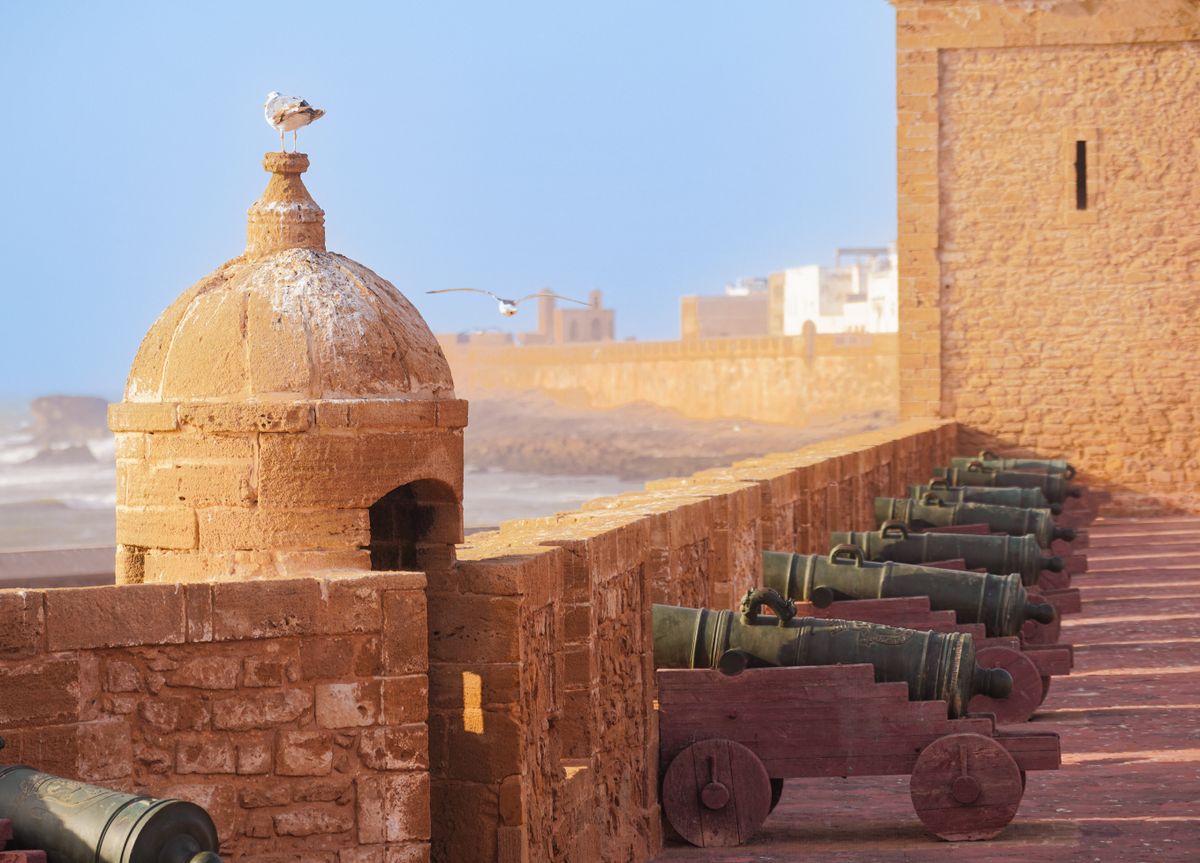
📍 The Skala de la Ville is the long fortified terrace over the sea, with a row of bronze cannons pointing towards the ocean. It's the perfect spot for sunset, which here falls over the water. Does it feel familiar? These walls ended up in Game of Thrones. Under the arches, craftsmen work thuja wood, fragrant and inlaid: looking is free.
The Wind Beach
📍 South of the medina stretches a very long beach, the realm of kitesurfing and windsurfing: it's no coincidence Essaouira is called the wind city. Towards Diabat you'll find the ruins of an old fort on the sand.
Ifrane, the Switzerland of Morocco
📍 Ifrane was born during the French protectorate as a hill-station resort, and it shows: chalets with red sloping roofs, tree-lined avenues, immaculate gardens. Its emblem is a large lion carved in stone, set amid the greenery: a reminder that the Atlas lion once roamed these mountains. In winter it often snows and half of Morocco comes to play in the snow.

The cedar forest of Azrou
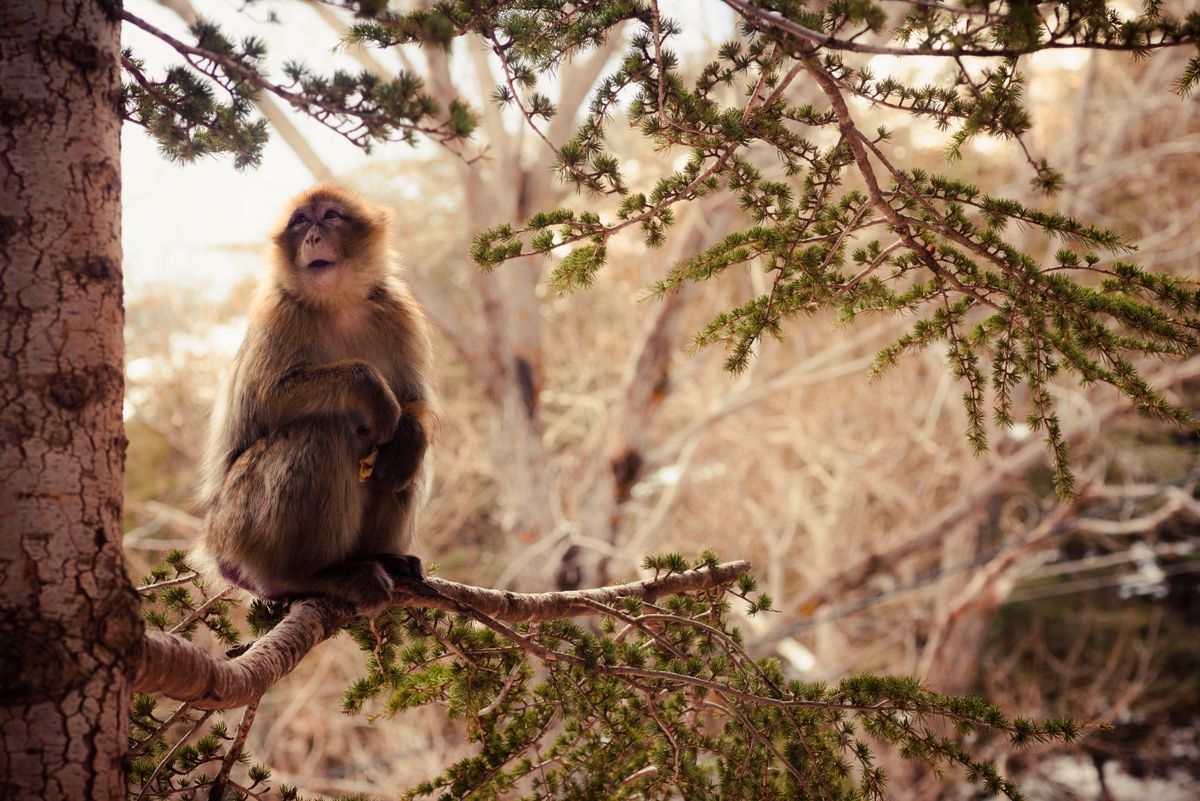
📍 Between Ifrane and Azrou lies a vast forest of Atlas cedars, with giant, centuries-old trees. This is where the Barbary macaques live, and they often come close to the road. They are an endangered species: watch them, photograph them, but do not feed them. Tourist food makes them ill and aggressive.
Day-by-day itinerary
Day 1: harbour and bastions
You arrive from Marrakech by bus and head straight to the port. Grilled fish on the quay, then the Skala du Port and the ramparts as far as the Skala de la Ville for sunset.
Day 2: the medina and the wind
Morning among the alleys of the medina and the thuya wood workshops. Afternoon on the beach: a kitesurfing lesson or a walk towards Diabat with the wind in your face. Dinner with a steaming tagine.
Day 3: towards the Middle Atlas
The least photogenic day of the trip. Bus to Marrakech, then train to Fez, and the day goes by like that. Snacks, a playlist and patience: after every climb there is always a descent.
Day 4: Ifrane
From Fez to Ifrane by grand taxi or bus. Chalets, avenues and the obligatory photo with the lion. Night in Ifrane or Azrou.
Day 5: cedars and Barbary macaques
Morning among the cedars, then a stroll around Azrou, a Berber town at the foot of the forest, and back to Fez.
Getting around
- Scheduled bus: CTM and Supratours are the main companies. From Marrakech to Essaouira it takes about three hours; in high season, buy your ticket in advance.
- Train: Essaouira has no railway, Fez does. Between the two stops: bus to Marrakech, then train.
- Grand taxi: shared taxis between cities and towns, leaving once they are full. The most practical option between Fès, Ifrane and Azrou.
- For the cedar forest: buses don't stop where the macaques are. You need a grand taxi all to yourself, a car or a guided tour.
- On foot: the medina of Essaouira is pedestrianised. At the gates you'll find porters with carts for your luggage.
What to eat
- Grilled sardines at the port of Essaouira: choose your fish at the stalls, they grill it on the spot and you eat it at the tables by the port.
- Tagine: a slow-cooked stew in a clay pot with a cone-shaped lid. Classic: chicken, lemon and olives.
- Friday couscous: the family lunch after prayer.
- Harira: a soup of tomato, lentils and chickpeas. During Ramadan it is always served when the fast is broken.
- Msemen: square, flaky pancake-like bread, cooked on a griddle, eaten at breakfast with honey and butter.
- Amlou: a spread of almonds, honey and argan oil. Spread on bread, it is addictive.
- Mint tea: very sweet, poured from a height to create the froth. They call it Berber whisky.
Where to stay
- Essaouira medina: riads with courtyards and everything within walking distance. A unique atmosphere, but cars stay outside the walls.
- Essaouira, beach area: outside the walls, more modern and quieter, handy for kitesurfing.
- Centre of Ifrane: a short walk from the lion. In winter ask whether the room is heated: the nights are cold.
- Azrou or Fez: Azrou is simpler but very close to the cedars. From Fez you can do Ifrane and Azrou in a day.
Stiratа tips
I'm not thrifty, but I am a bargain hunter 💸 Here's how to enjoy this Morocco while spending wisely.
- 👉🏻 Agree the price first, then the rest: with a grand taxi, at the port and in the souks, agree on the fare before you set off or sit down. Bargaining is part of it, but do it with a smile.
- 👉🏻 Cash in hand: in the souks, in taxis and at the harbour stalls you almost always pay in cash dirhams.
- 👉🏻 Argan yes, but wisely: buy your oil from the co-operatives, often run by women. And the goats in the argan trees? They really do climb them, but many of those by the roadside are there purely for the photo, in exchange for a tip.
- 👉🏻 Gnaoua Festival: usually in June Essaouira fills with music and accommodation sells out fast. Check the dates before you travel.
- 👉🏻 Internet as soon as you land: with the Holafly eSIM you have data without looking for a SIM at the airport. With my Holafly link you get 5% off.
- 👉🏻 Travel insurance: between street food, mountain bends and kitesurfing, it's best not to go without it. With Heymondo and the code STIRATIINTRIP you get 10% off. If you do sport, check first that the policy covers it.
Full disclosure: Holafly and Heymondo are affiliate links, so you get a discount and I get a small commission. All links and codes are in Travel discounts.
Stiriosity
😱 Did you know? 😱
- Hendrix's sandcastle: it is said that Jimi Hendrix wrote «Castles Made of Sand» while looking at the ruined fort of Diabat. The trouble is that the song came out in 1967 and he didn't arrive in Morocco until 1969.
- Record cold: in Ifrane, in 1935, the thermometer dropped to almost minus 24 degrees, one of the lowest temperatures ever recorded in Africa.
- A town of caves: the name Ifrane comes from the Berber word «ifri», meaning cave. And the caves really were there: the old village was carved into the rock.
My videos
I told the story of this off-the-beaten-track Morocco on TikTok:
- Ifrane, la piccola Svizzera del Marocco: oltre 130mila visualizzazioni, grazie Stirati!
- Grilled fish at the harbour of Essaouira
For future trips, follow me on Instagram and TikTok: I'm @stiratiintrip. And if you want Africa in turquoise-sea mode, I'll be waiting for you at Nosy Be and Nosy Iranja.
Have you been? Team ocean and wind or team cedars and macaques? 🫵🏻
Travel creator from Bologna. I don't iron, but I am ironed: I tell stories of fantastic trips, write free itineraries and always look for the low-cost solution 💸
Keep travelling
One-week itinerary for Nosy Be and the islands of Madagascar
10-day North Madagascar itinerary
Bologna in 2 days: what to see, what to eat and where to stay
One-week itinerary for Nosy Be and the islands of Madagascar
10-day North Madagascar itinerary
Bologna in 2 days: what to see, what to eat and where to stay
Comments from the Stirati
No comments yet. Start the conversation.