
Assisi in a weekend: an itinerary through art, history and Umbrian flavours
Start here
Hello Stirati! Assisi is one of those places that can surprise you even when you think you already know what to expect. It is known above all for San Francesco, Santa Chiara and its places of worship, but wandering through the narrow streets of the centre you also discover Roman remains, panoramic views and Umbrian cuisine that is well worth trying. It is a town rich in history and spirituality, but also very touristy.
Before you leave
 How many days you need: I would recommend at least 2 days to visit Assisi and the main Franciscan sites at a relaxed pace. If you only have one day, you will need to choose your stops, whereas with one extra day you can also explore the surrounding countryside.
 Currency: euro (€)
 How to pay: physical card
 Getting around: the historic centre is visited mainly on foot. Be prepared, however, to walk quite a lot: Assisi is built on a hill, and some attractions lie outside the walls or in higher areas. To reach places such as the Eremo delle Carceri and Santa Maria degli Angeli you can use a car or public transport.
 Where to park: if you arrive by car, bear in mind that the historic centre is subject to traffic restrictions. Among the most convenient car parks for visiting the centre are those in Piazza Matteotti and at Porta San Giacomo.
 Internet: if you're travelling from abroad, you might consider an eSIM to stay connected. I recommend Holafly: with the code STIRATIINTRIP you get 5% off, or you can buy your eSIM directly from this link with the discount already applied
 Travel insurance: before setting off, consider a policy that covers your travel needs. With Heymondo you can get 10% off through my link.
 Best time to visit: Assisi is wonderful in every season, and I would not single out one period above another. I visited in autumn, when the foliage colours the landscape and the first Christmas decorations and festive atmosphere begin to appear. A truly atmospheric time to discover the town, with the warm colours of the season and the first preparations for Christmas.
What you'll find in this guide
What to see in Assisi
From the Basilica of St Francis to the Rocca Maggiore, passing through churches, medieval alleyways and places connected with the life of the Saint. I'll take you through the most important stops, with practical information and curiosities to know during your visit.
Where to eat and what to eat in Assisi
I'll tell you which dishes to try and the places where I stopped during the trip.
Where to stay in Assisi
I'll tell you about the accommodation where I stayed and some useful tips for choosing the area in which to spend the night.
Special experiences in Assisi
Not only monuments: you'll also discover places surrounded by greenery and lesser-known traces linked to the Franciscan history.
Itinerary in brief
Day 1: Basilica of San Francesco, Sanctuary of the Renunciation and Santa Maria Maggiore, a stroll through the historic centre between Piazza del Comune, the Temple of Minerva and the Roman Forum, as far as the Basilica of Santa Chiara.
Day 2: Cathedral of San Rufino, Rocca Maggiore, the Eremo delle Carceri set in the woods, the Church of San Damiano and the Basilica of Santa Maria degli Angeli, where the Porziuncola is located.
What to see in Assisi
First day
Basilica of Saint Francis
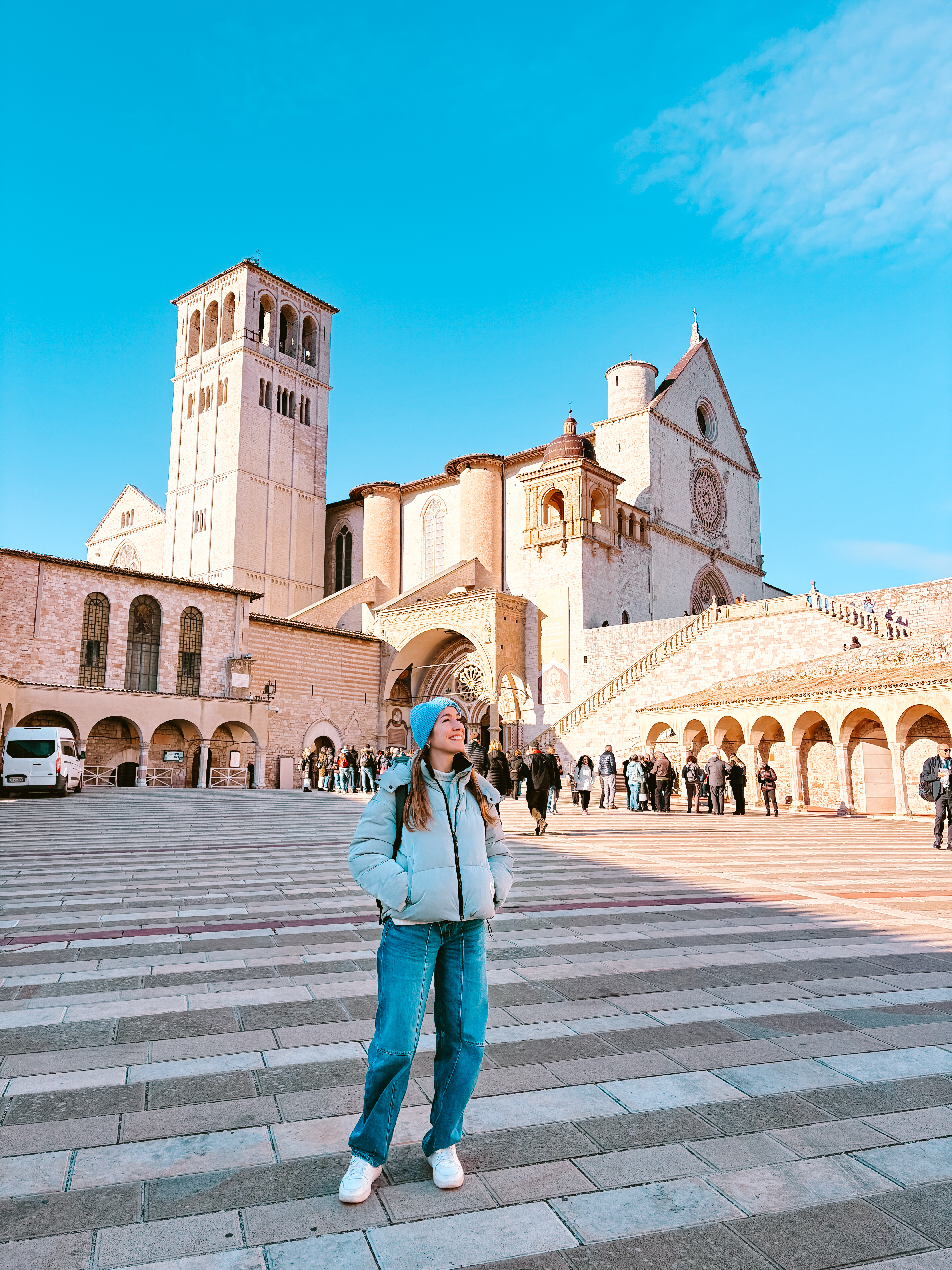
This is probably the most famous place in Assisi and an essential stop. The Basilica was begun in 1228, shortly after Francis's death, to house his remains and celebrate his life.
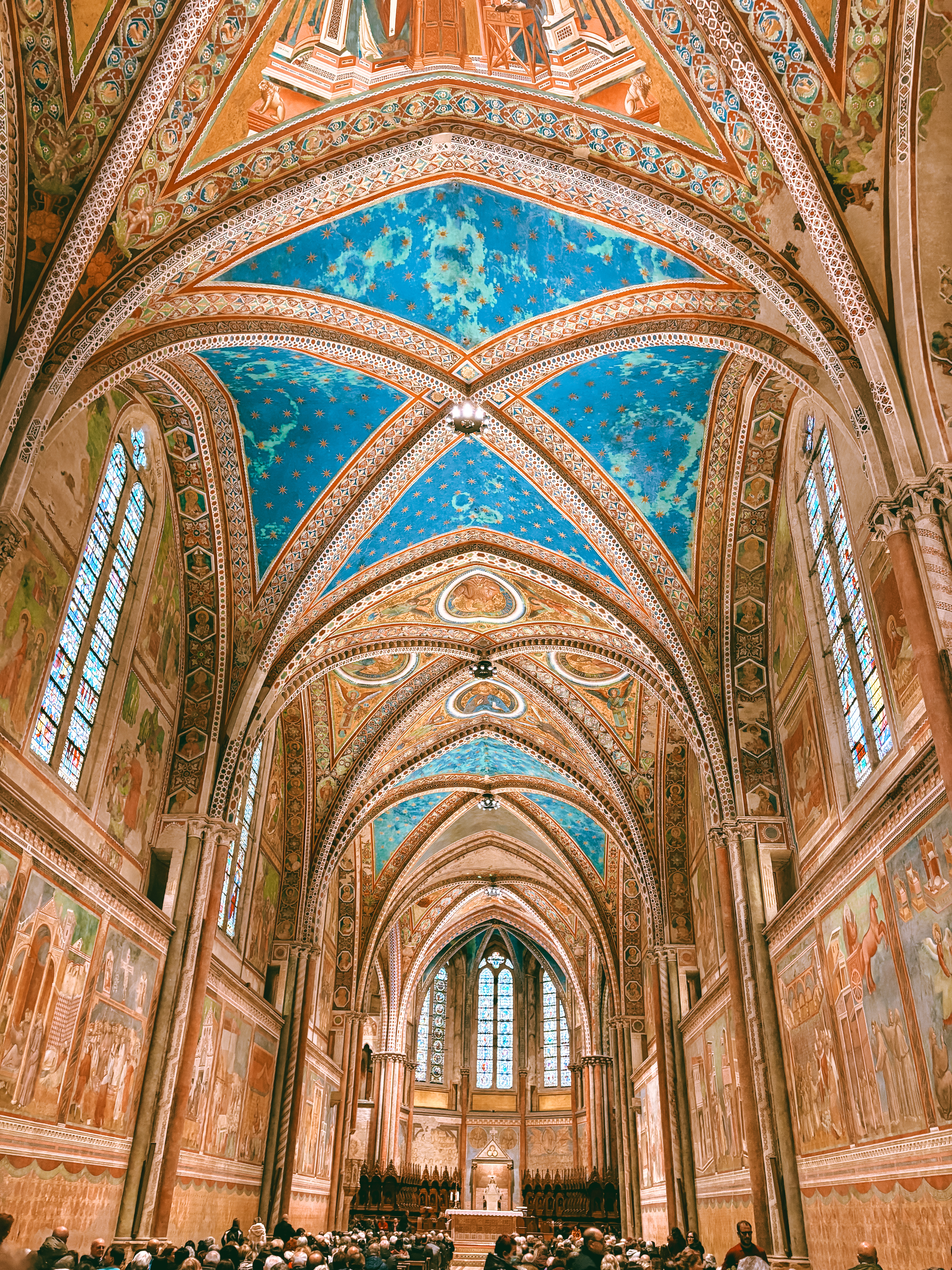
The complex consists of two superimposed churches, the Lower and the Upper Basilica, both extremely rich in artworks and frescoes. Among the artists and masters associated with the painted cycles are Giotto, Cimabue, Simone Martini and Pietro Lorenzetti.
The Lower Basilica has an intimate and evocative atmosphere, while the Upper one impresses with its brightness and the famous cycle of frescoes dedicated to the life of Saint Francis.
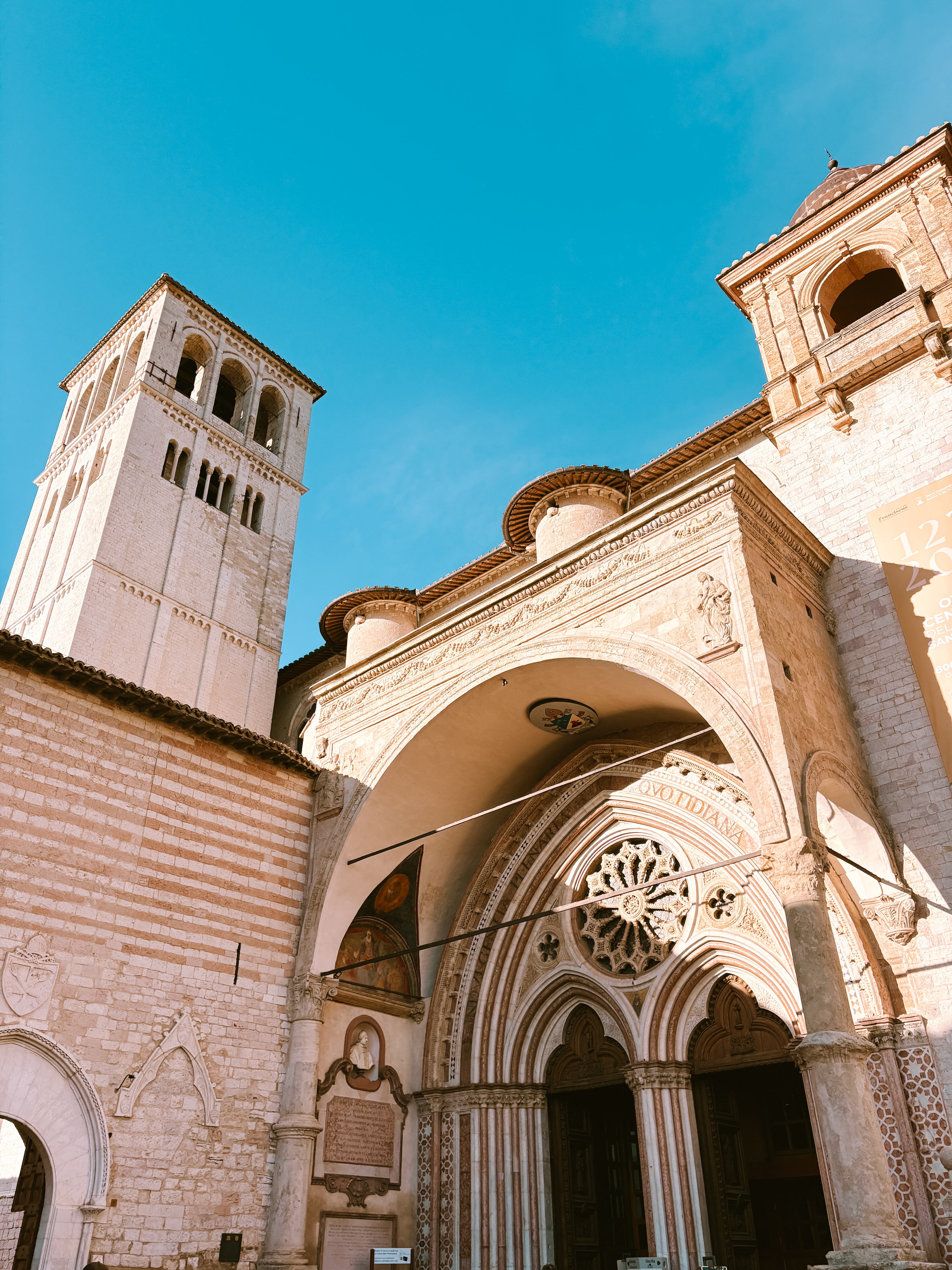
Going down into the crypt you find the tomb of the Saint, a place of pilgrimage for visitors from all over the world.
Opening hours: these vary according to the season and religious celebrations. It is advisable to check the up-to-date times before your visit.
Price: free entry.
Recommended time: at least 1 hour and 30 minutes.
StiraTip — Avoid Sundays!
If you can, avoid visiting the Basilica on a Sunday. Masses are celebrated and the presence of many worshippers and tourists makes the visit considerably more crowded. Better to choose another day of the week to enjoy it more calmly!
Santa Maria Maggiore and the Sanctuary of the Renunciation
This church houses one of the most important moments in Francis's life: his public renunciation of the family's goods and wealth.
According to tradition, it was here, before the bishop Guido and Francis's father Pietro di Bernardone, that the young Francis stripped off his clothes and returned everything to his father, choosing to abandon the comfortable life he had led until then.
It was a powerful symbolic gesture: Francis renounced material wealth to devote himself entirely to a life of poverty and faith.
The church also houses the Sanctuary of the Renunciation, dedicated to this fundamental moment of his conversion.
Opening hours: in winter generally from 8:00 to 19:00; in summer from 8:00 to 22:00, with some variations.
Price: free.
Recommended time: 20–30 minutes.
The historic centre: Piazza del Comune, the Temple of Minerva and the Roman Forum
One of the loveliest things to do in Assisi is simply to get lost in its narrow streets. The historic centre is a succession of stone alleyways, small squares, arches and views over the Umbrian hills.
The landmark is Piazza del Comune, the heart of the town, which overlooks the Temple of Minerva.
Temple of Minerva
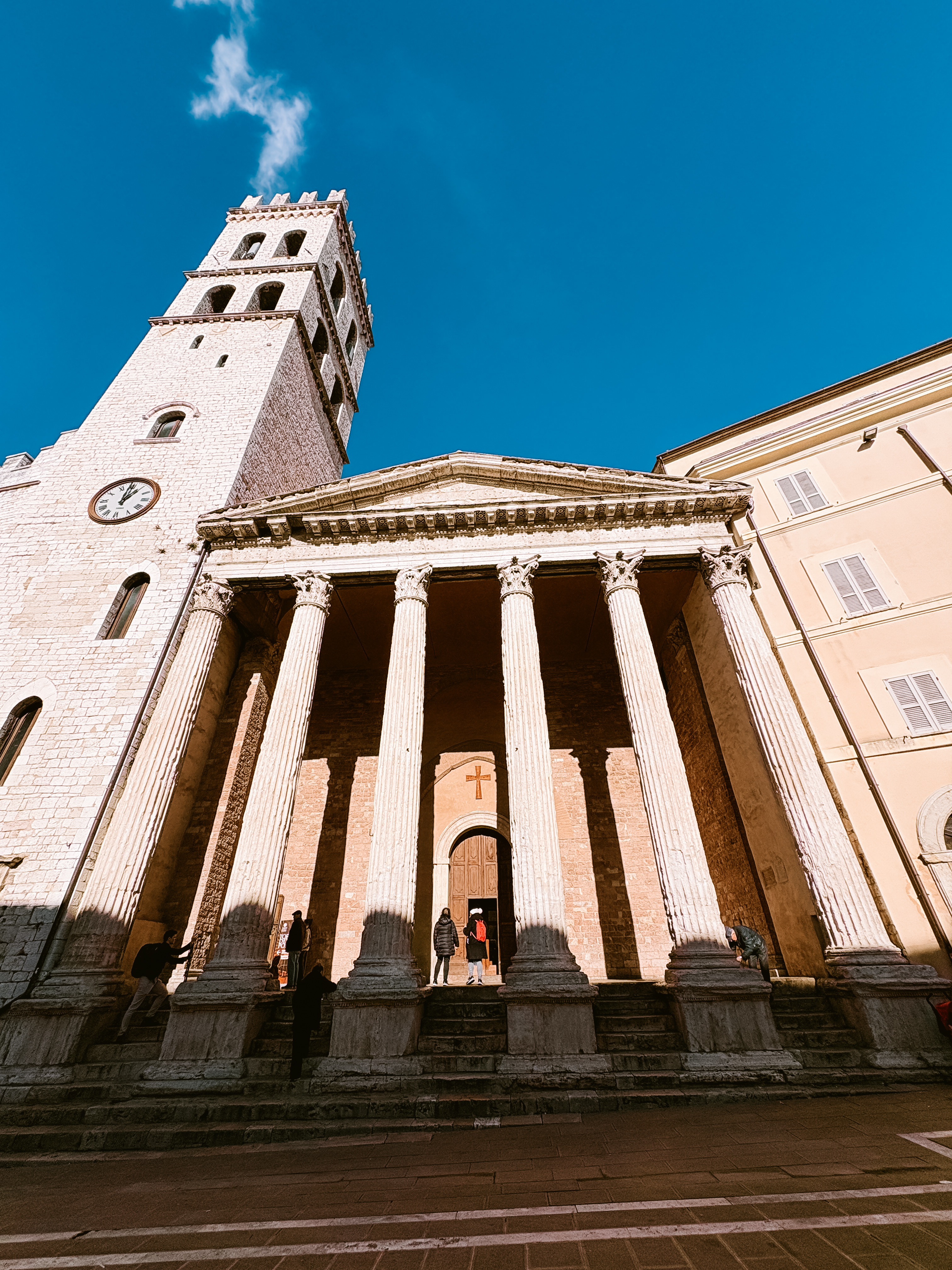
Do not be deceived by its appearance: what today looks like a religious building is in fact an ancient Roman temple, built in the 1st century BC and dedicated to the goddess Minerva.
The façade still retains its original Corinthian columns, a striking reminder of the Roman presence in Assisi. Over the centuries the building was converted into a church, becoming the Church of Santa Maria sopra Minerva.
Opening hours: the square is freely accessible; to visit the inside of the church, check the times of services and opening hours.
Price: free.
Recommended time: 10–15 minutes.
Roman Forum and archaeological collection
Beneath Piazza del Comune lie the remains of ancient Roman Asisium. The route takes you down into the underground levels to see the remains of the forum, which was the centre of public life in the town.
Among the finds and archaeological remains, you can make out elements of the ancient forum, inscriptions and traces of everyday life in Roman times.
Opening hours: from November to February generally 10:00–17:00, closed on Tuesdays. In other months the hours change according to the season.
Price: full ticket approximately €7.
Recommended time: 30–45 minutes.
Stiriosity — There's another town beneath your feet!
As you walk through the central Piazza del Comune, you might not imagine that the remains of the ancient Roman forum lie right beneath your feet. Assisi is not only medieval and Franciscan: it also holds a much older history, which resurfaces in its undercrofts.
Basilica of Saint Clare
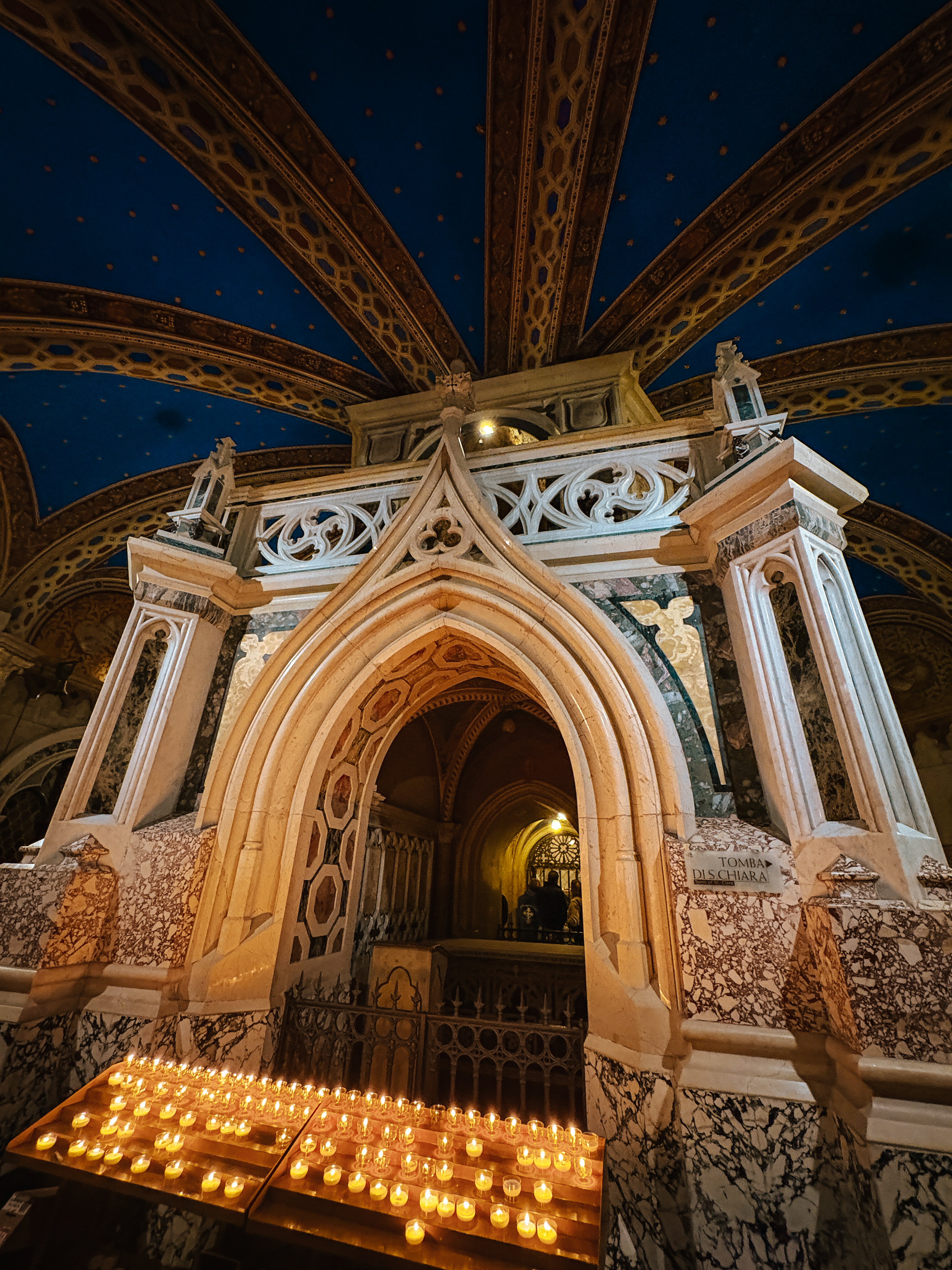
The Basilica of Saint Clare is one of the most important places in Franciscan history. It is dedicated to Clare of Assisi, who followed Francis's example and founded the Order of Poor Ladies, choosing a life of poverty and prayer.
The church is recognisable at once by its façade of pink and white stone from Monte Subasio and its distinctive flying buttresses.
Inside are the remains of Saint Clare and the Chapel of the Crucifix of San Damiano, where the famous crucifix that, according to tradition, spoke to Francis asking him to repair the Church is kept.
Opening hours: generally in the morning 6:30–12:00 and in the afternoon 14:00–17:45, with longer hours during summer time. There may be variations for services.
Price: free.
Recommended time: 30–45 minutes.
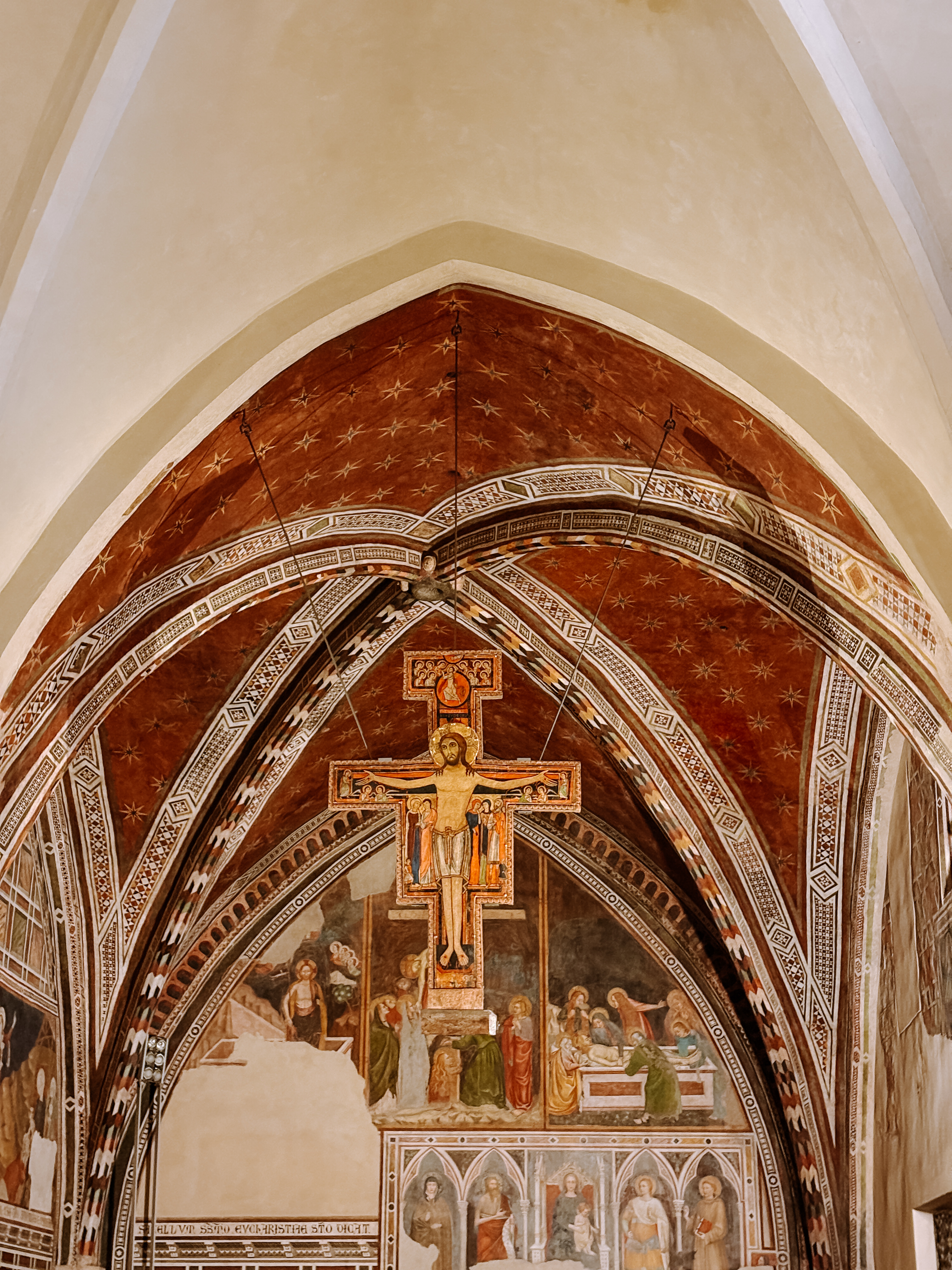
According to tradition, while Francis was praying in the small church of San Damiano, the crucifix spoke to him these words: «Go and repair my house, which, as you can see, is falling completely into ruin».
Initially Francis interpreted the message literally, devoting himself to repairing ruined churches. Only later did he understand that the call had a much deeper meaning.
Second day
Cathedral of San Rufino
The Cathedral of San Rufino is the town's main religious building and one of the most important examples of Umbrian Romanesque architecture.
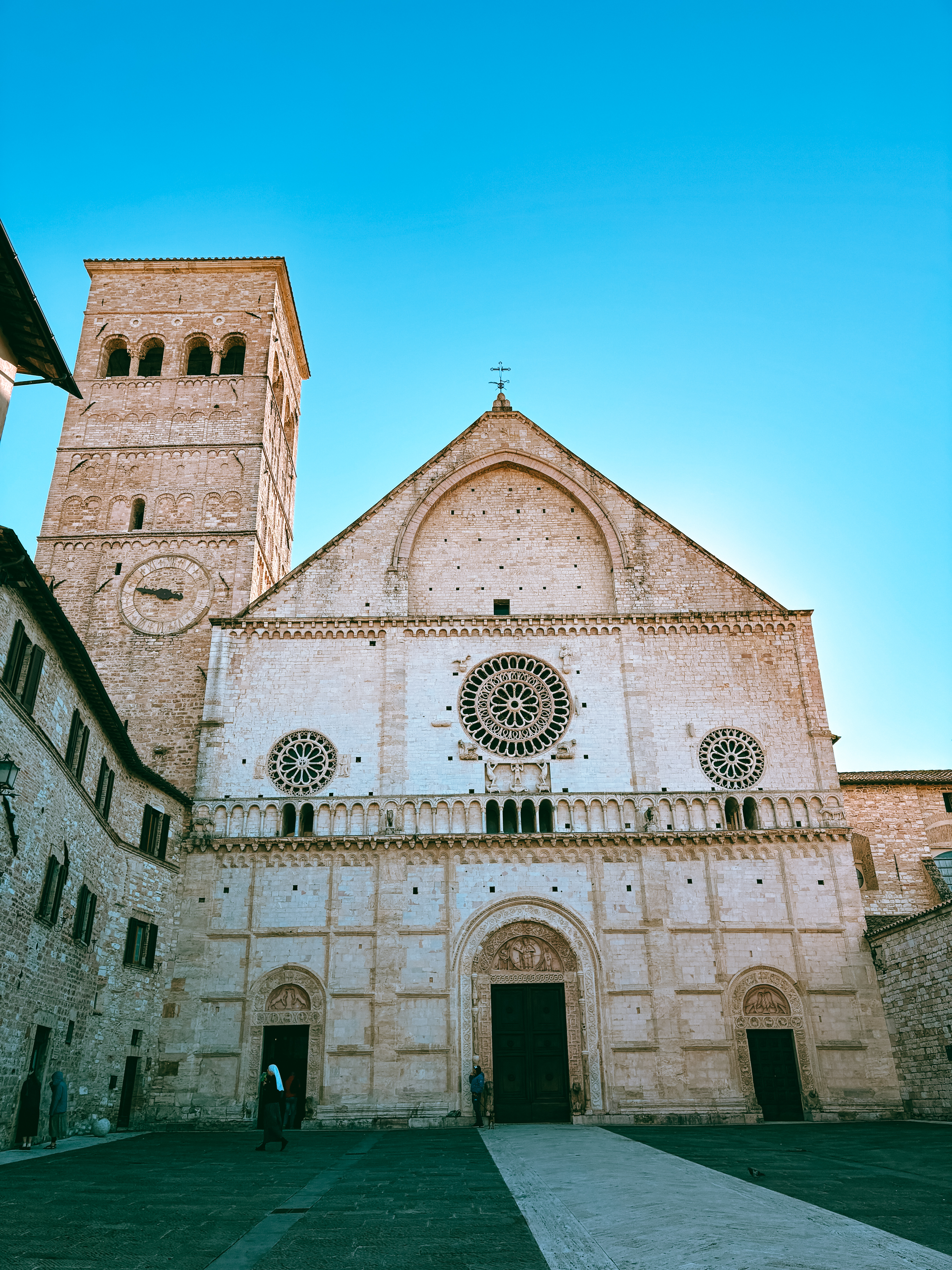
The stone façade is particularly striking, with three rose windows and three richly decorated portals. The church is dedicated to Saint Rufinus, patron saint of Assisi.
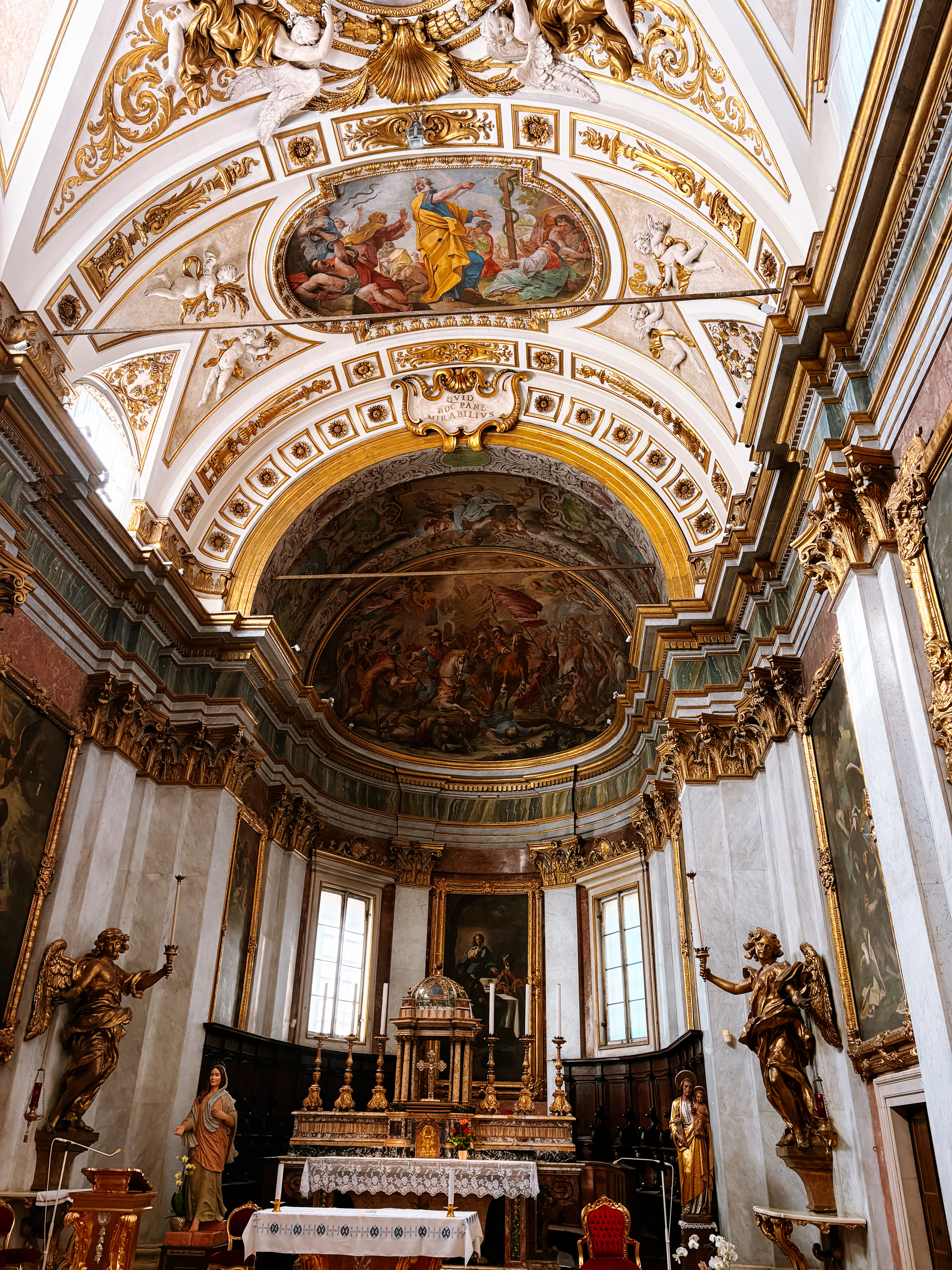
Inside is the baptismal font where, according to tradition, both Francis and Clare were baptised. This detail makes this stop especially meaningful for anyone wishing to retrace the history of the two saints.
If you have time, you can also visit the Diocesan Museum and the undercroft, where archaeological finds and structures from earlier phases of the building are preserved.
Cathedral opening hours: generally 7:30–19:00, with possible changes for religious services.
Price: entry to the Cathedral is free. A ticket is required for the underground levels and the Diocesan Museum, approximately €4 for full entry.
Recommended time: 30–45 minutes for the Cathedral; allow more time if you visit the museum.
Rocca Maggiore
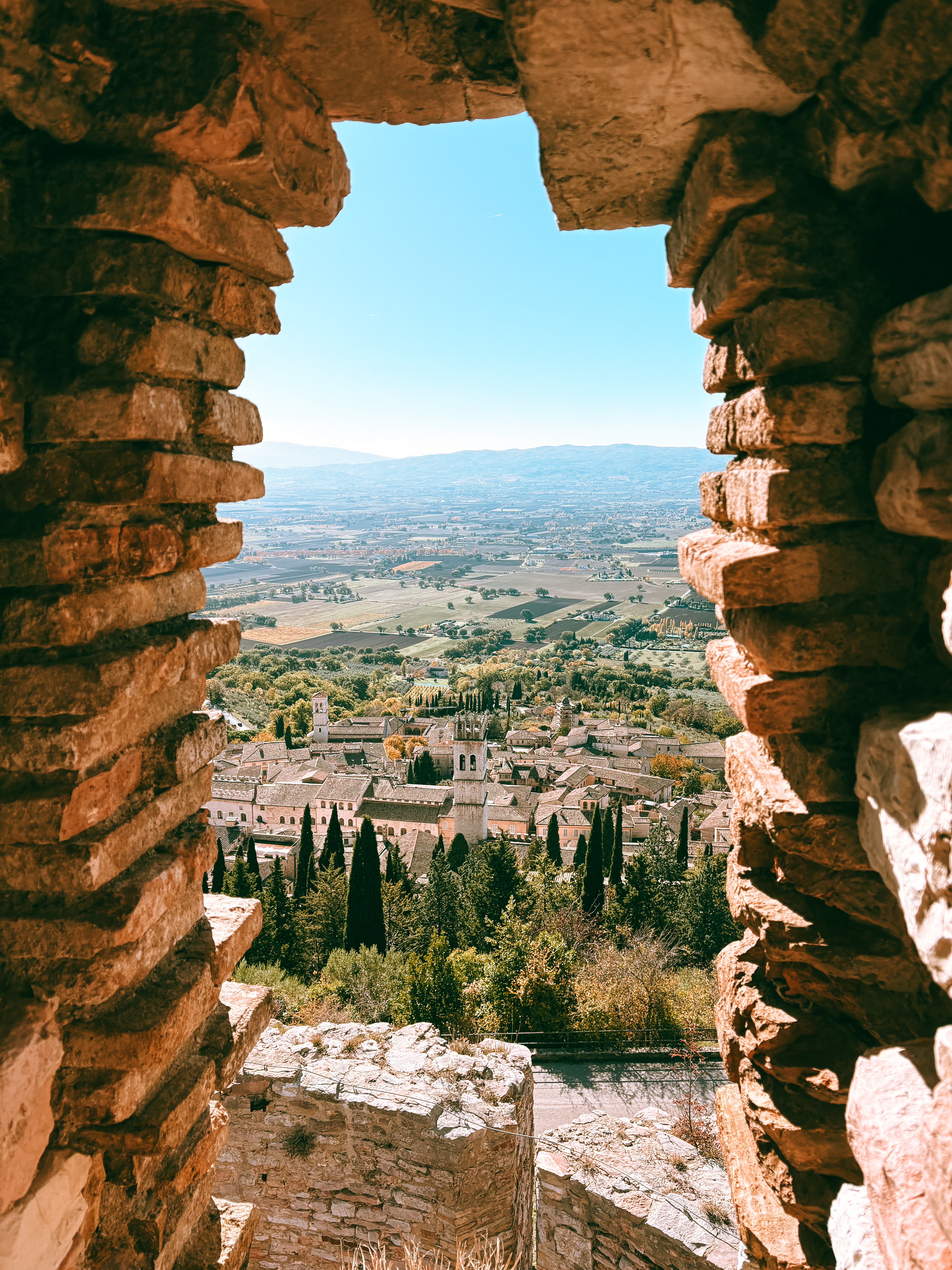
If you want to admire Assisi from above, you must not miss the Rocca Maggiore.
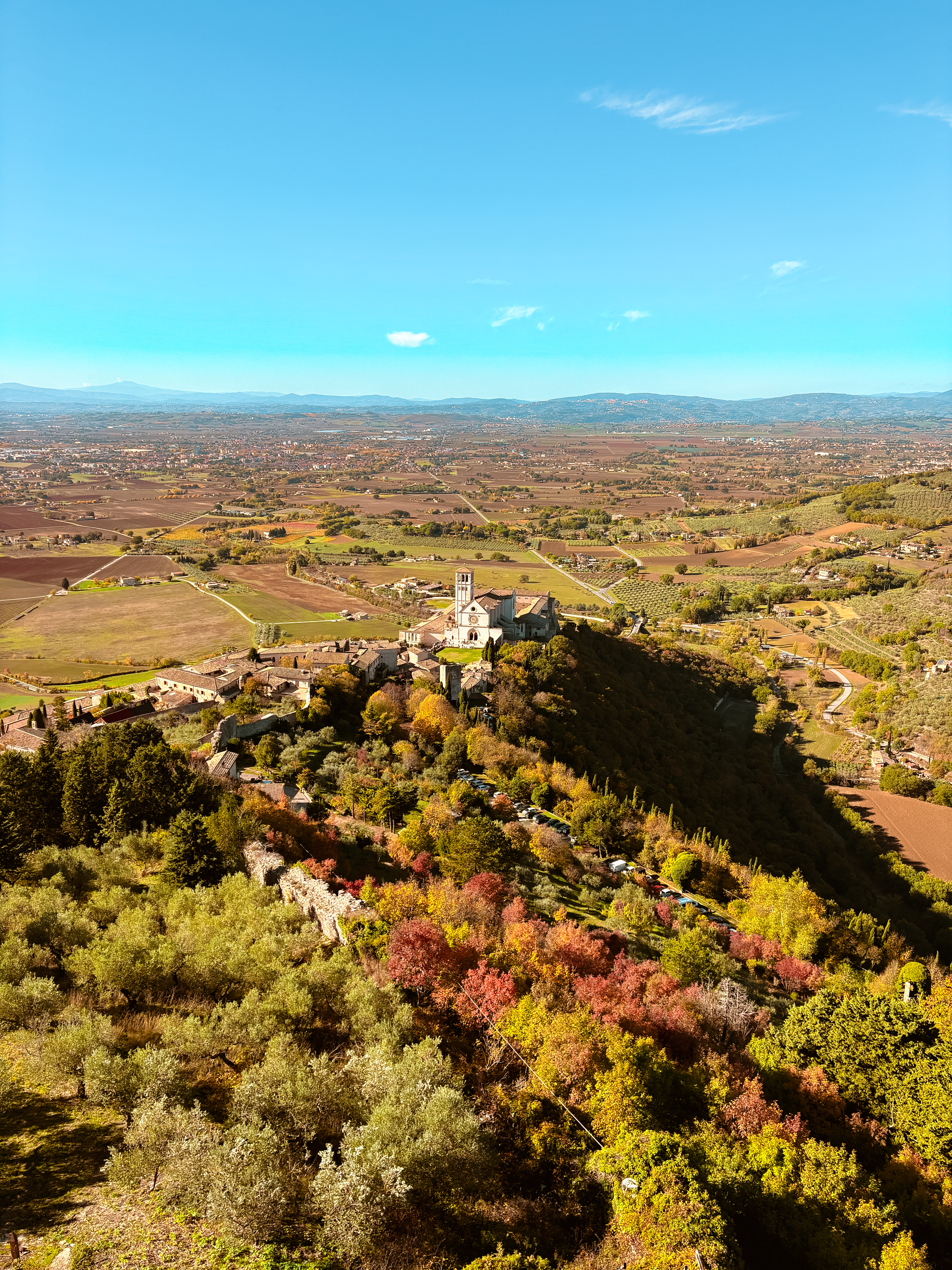
The fortress dominates the town from the top of the hill and offers a spectacular view over the rooftops of Assisi, the Umbrian valley and the surrounding countryside.
The structure has medieval origins and was extended and modified over the centuries. Its strategic position allowed it to control the surrounding territory and defend the town.
The visit allows you to explore the walls, the walkways and the interior spaces. The view is certainly one of the main reasons to climb up here.
Opening hours: these vary according to the time of year. Approximately 10:00–17:00 in winter, with extended hours during the warmer months.
Price: full ticket €8.
Recommended time: 45–60 minutes.
Eremo delle Carceri
About 4 kilometres from the historic centre, on the slopes of Monte Subasio, lies the Eremo delle Carceri, one of the most evocative places associated with the life of Saint Francis.
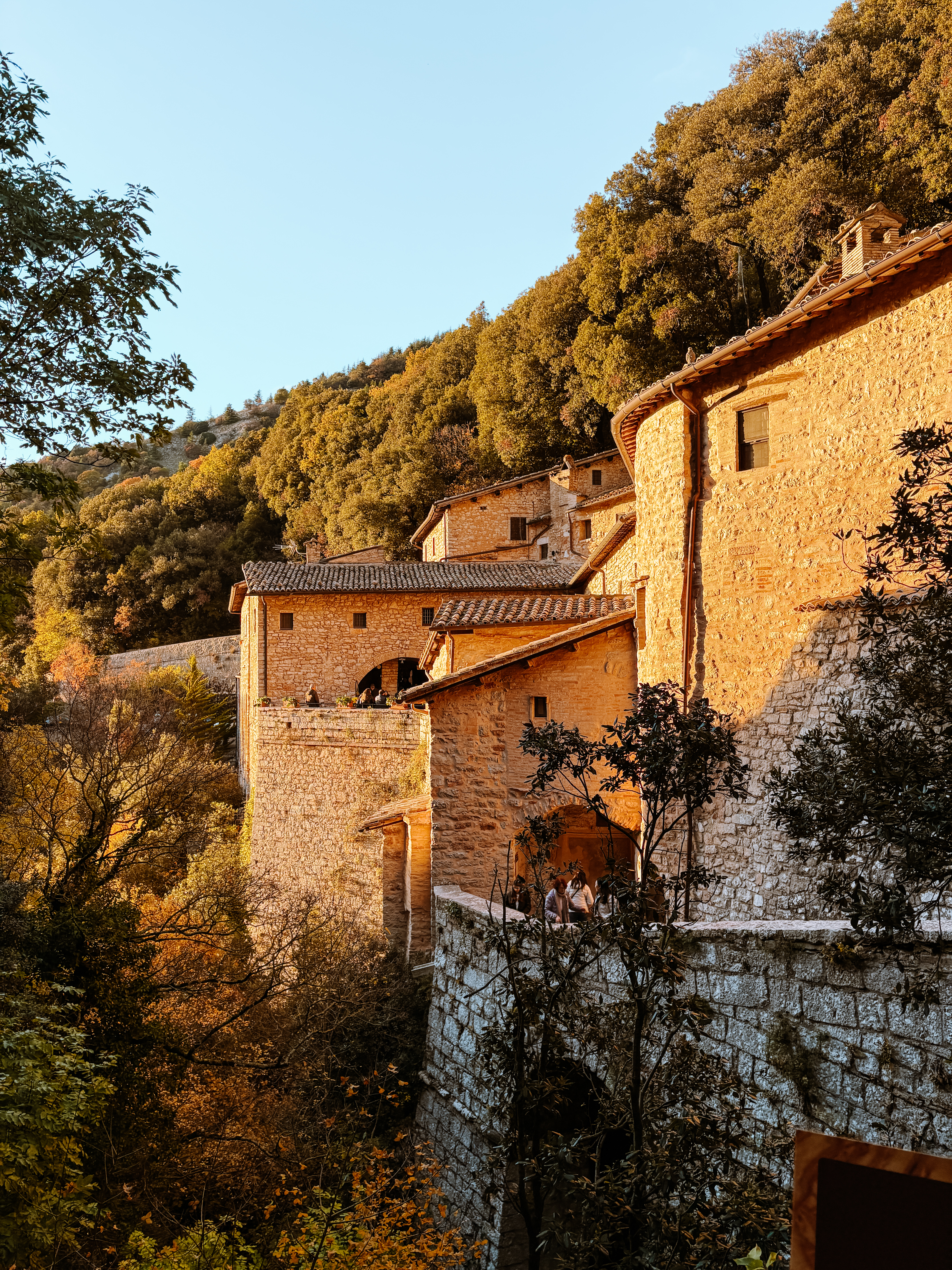
Set in a holm oak wood, this sanctuary was one of the places where Francis and his companions retreated to pray and live in solitude.
The name shouldn't mislead you: it is not a prison. The word «carceri» comes from the Latin carceres and evokes the meaning of secluded, isolated places.
The complex contains caves, small prayer rooms and spaces that tell the story of the simple, contemplative life of the first Franciscan friars.
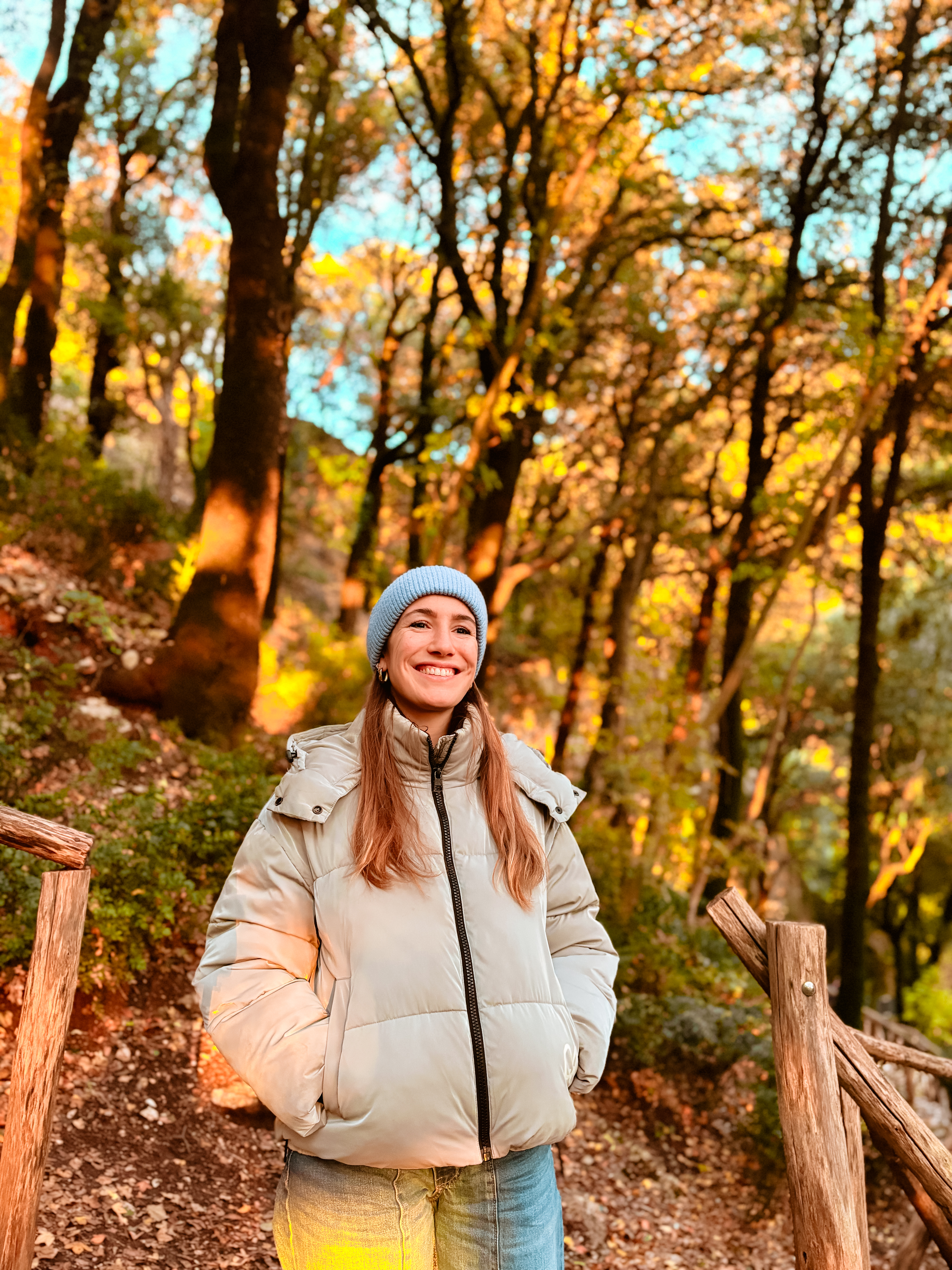
Leaving the sanctuary, you can also continue along the woodland paths, among centuries-old trees and scenic views immersed in nature.
Opening hours: in winter generally 6:15–18:00 on weekdays and 7:15–18:00 on public holidays. In summer it generally closes at 19:00.
Price: free.
Recommended time: 45–60 minutes for the sanctuary, longer if you want to stroll through the woods.
How to get there: you can reach it by car or on foot, following the path that starts at Porta Cappuccini. The climb requires a bit of fitness.
Sanctuary of San Damiano
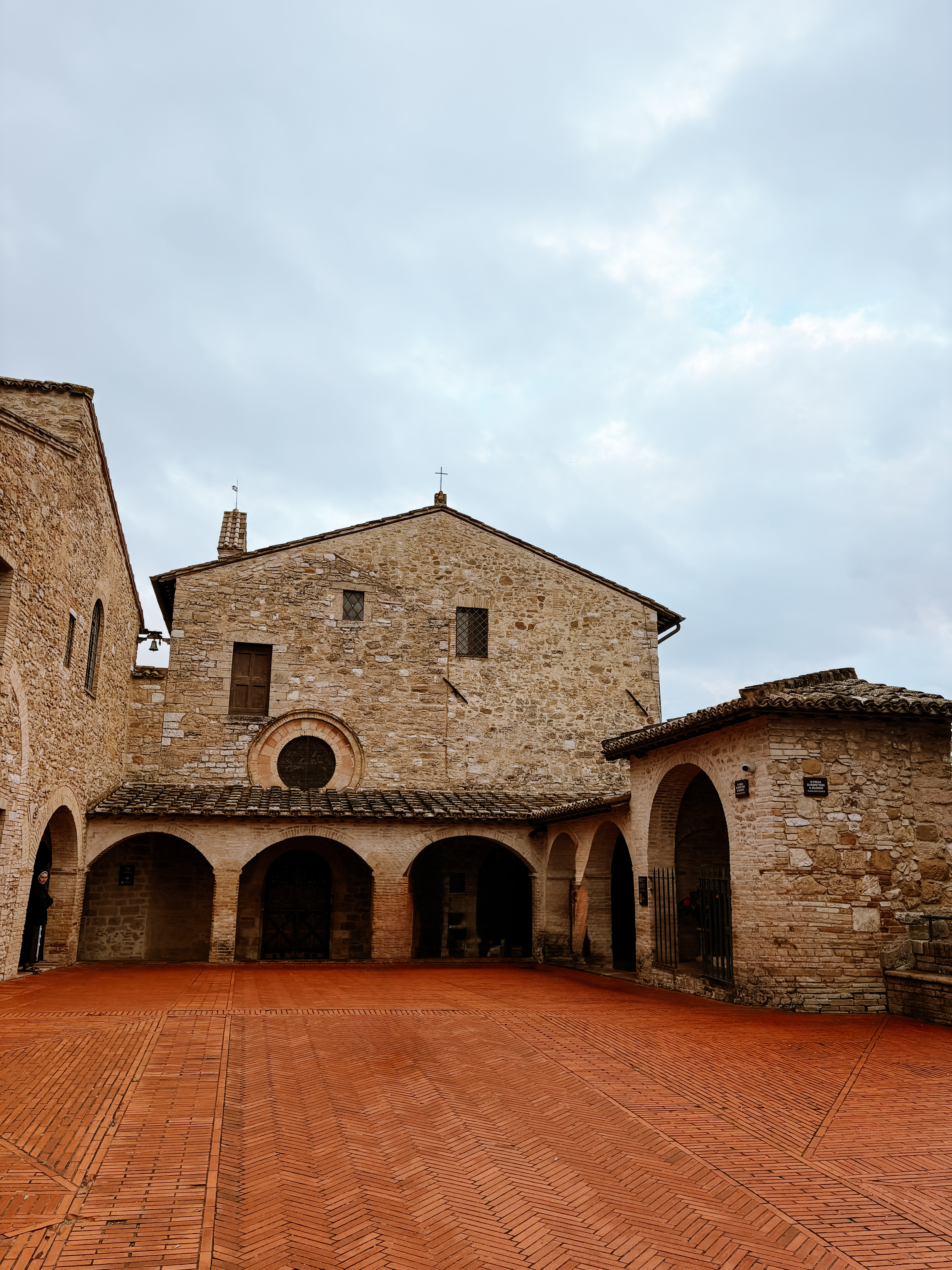
Just outside the historic centre lies the Sanctuary of San Damiano, one of the most important places in the story of Francis and Clare.
It was right here that, according to tradition, Francis received from the crucifix the call to repair the Church. The young man then set about restoring this building, which at the time was in a precarious condition.
San Damiano is also deeply linked to the life of Saint Clare, who spent many years here together with the first sisters of the Order of Poor Ladies.
The atmosphere is far more intimate than in Assisi's great basilicas and retains a simple, quiet character. It is worth visiting the cloister, the refectory and the rooms connected with the life of the first Poor Clares, when accessible.
Church opening hours: generally 6:15–12:00 and 14:00–17:45 during winter time; in summer the afternoon may continue until 19:45.
Visit route opening times: approximately 10:00–12:00 and 14:00–16:30 in winter, with longer opening hours in summer.
Price: free.
Recommended time: 30–45 minutes.
Basilica of Santa Maria degli Angeli and the Porziuncola
A few kilometres from the historic centre, in the hamlet of Santa Maria degli Angeli, stands one of the most important basilicas of Franciscan spirituality.
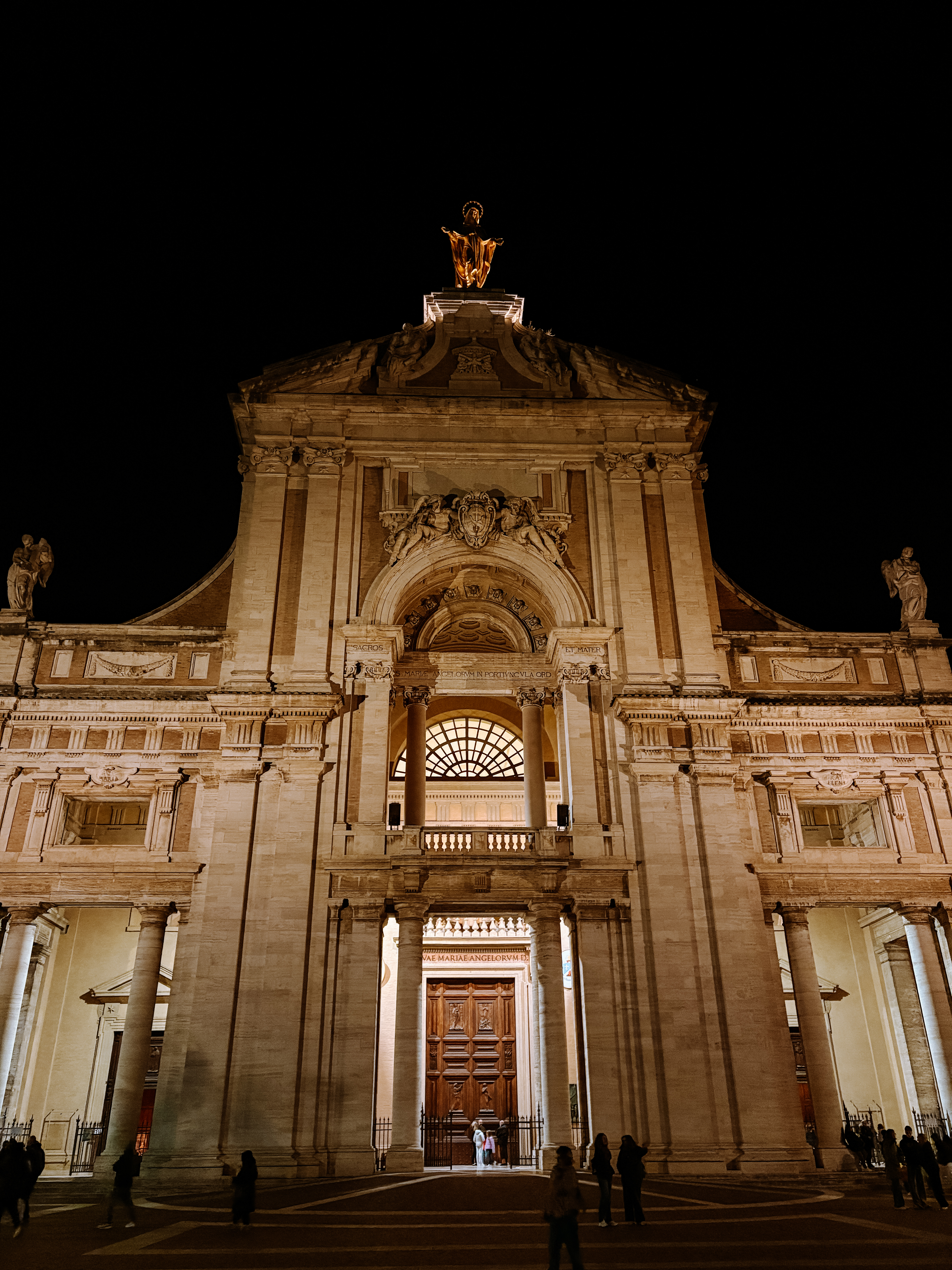
The great Basilica of Santa Maria degli Angeli was built between the 16th and 17th centuries to house some of the most important sites from Francis's life.
Inside it is the Porziuncola, a small chapel that Francis restored and which became the centre of his religious experience and the birthplace of the Franciscan Order.
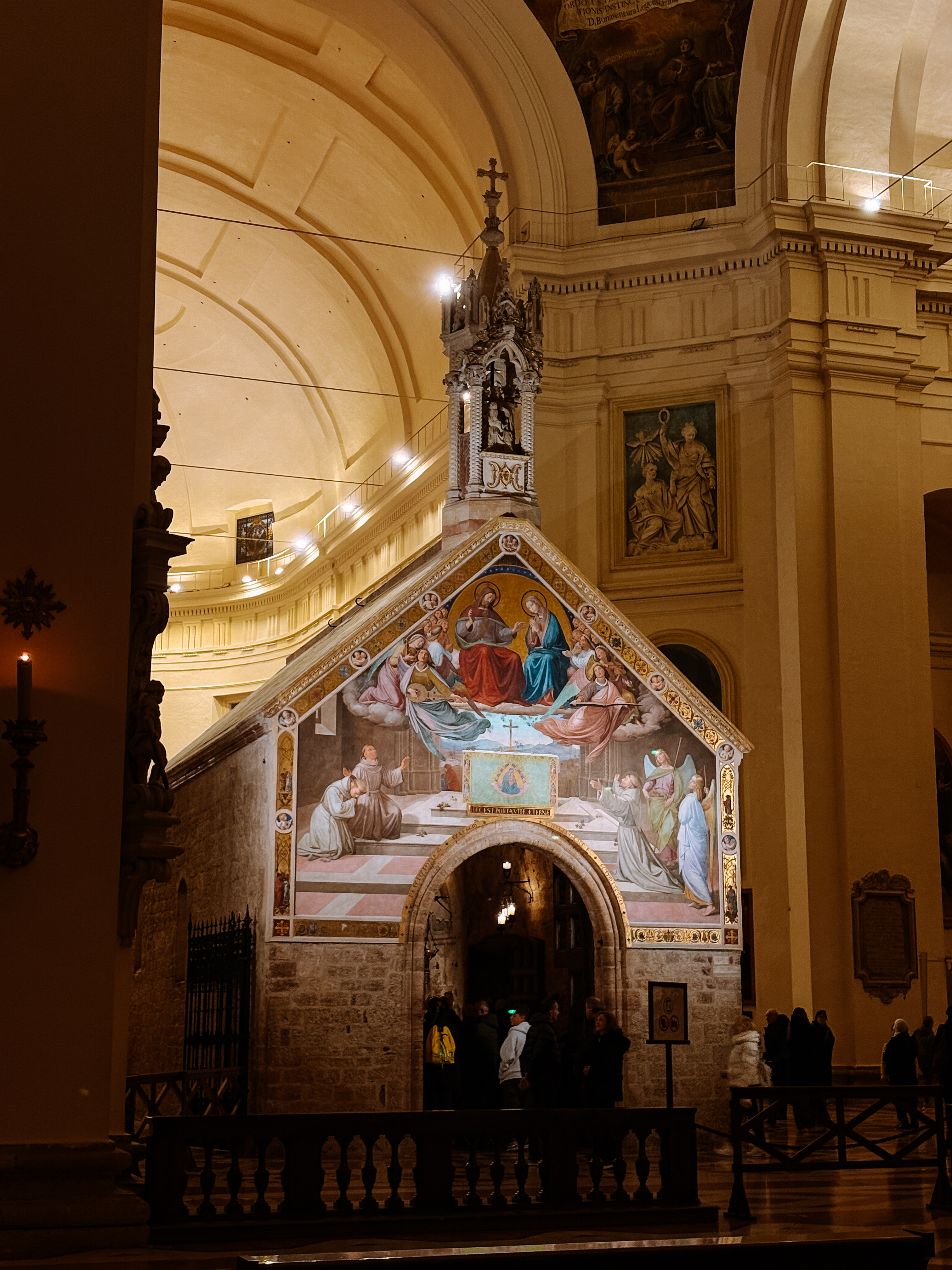
It is a fundamental place also because it was here that Francis welcomed his first companions and, according to tradition, the Franciscan movement began.
Another important area is the Chapel of the Transit, built on the spot where Francis died on 3 October 1226.
Opening hours of the inner route: generally 7:30–12:30 and 14:30–19:00.
Price: free entry.
Recommended time: 45–60 minutes.
Other experiences near Assisi
Spello
Head to Spello, one of the most characteristic villages in Umbria, nestled on the slopes of Monte Subasio. It is a small tangle of stone lanes, flowery staircases, balconies decorated with plants and panoramic views over the Umbrian Valley. Its charm lies in its calm, well-kept atmosphere, in the details you encounter while strolling unhurriedly, and in the traces of its Roman and medieval past.
Here is what to see:
Porta Consolare: one of the historic entrances to the town, of Roman origin.
Via Giulia: one of the characteristic streets of the centre.
Piazza della Repubblica: one of the main squares.
Collegiate Church of Santa Maria Maggiore: it houses the Baglioni Chapel, famous for the frescoes by Pinturicchio.
Viewpoints: look for the panoramic spots overlooking the valley.
Spello is also perfect for photographing architectural details and lesser-known corners, letting yourself be guided by its alleys and staircases.
What to eat in Assisi
Umbrian cuisine is made of simple dishes, local ingredients and recipes from the peasant tradition. During the trip I tried to taste some of the most representative specialities of the area.
Here's what I'd recommend you try!
1. Torta al testo
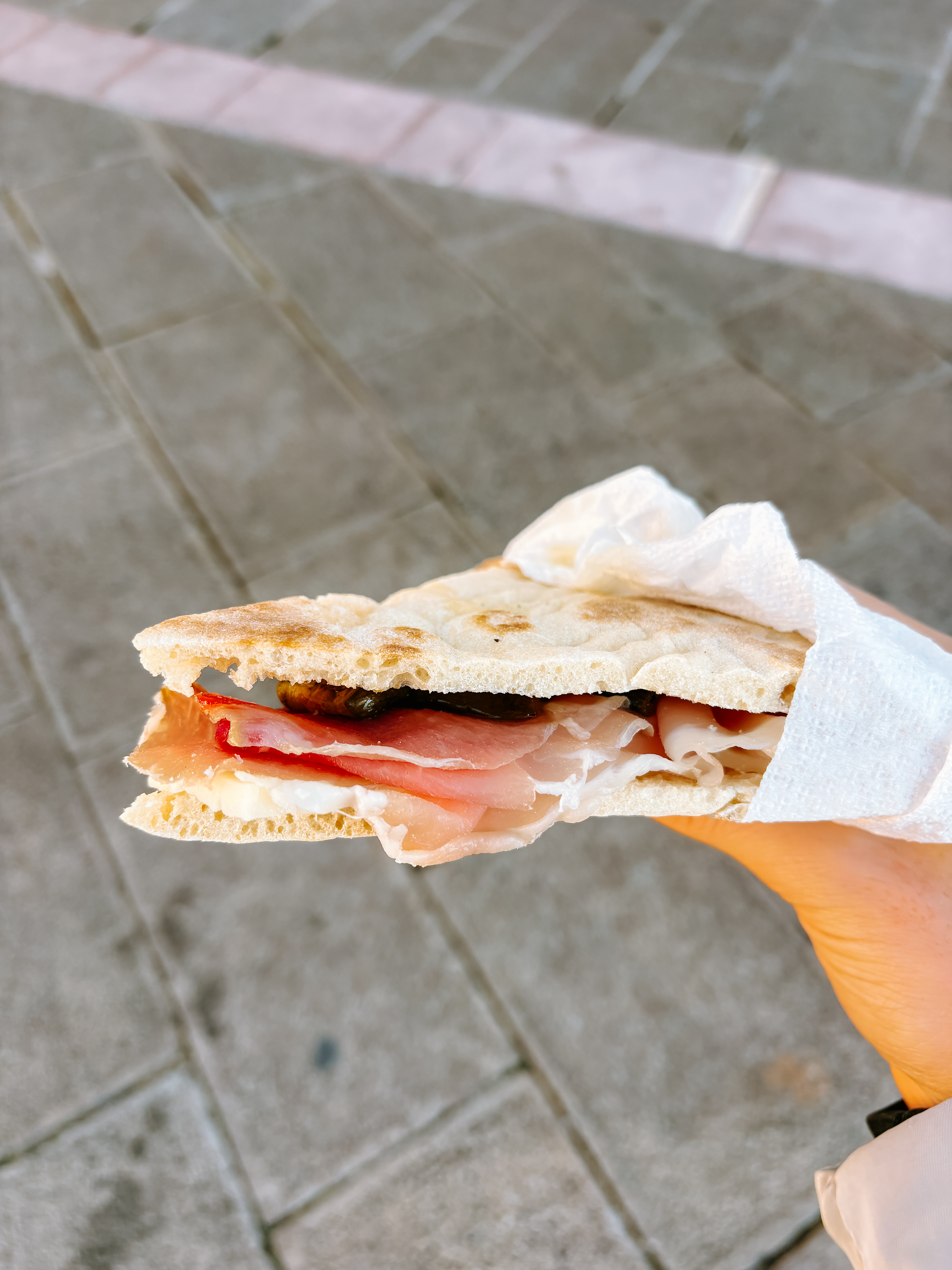
This is one of the best-known Umbrian specialities. It is a sort of flat bread, prepared with a simple dough of flour, water and salt, traditionally cooked on a stone griddle called testo.
It can be filled in many ways: with ham, cured meats, cheeses, vegetables and sausage.
It is ideal for a quick lunch or a snack during your visit.
 Where to try it: Assisi Sapori.
2. Rocciata d'Assisi
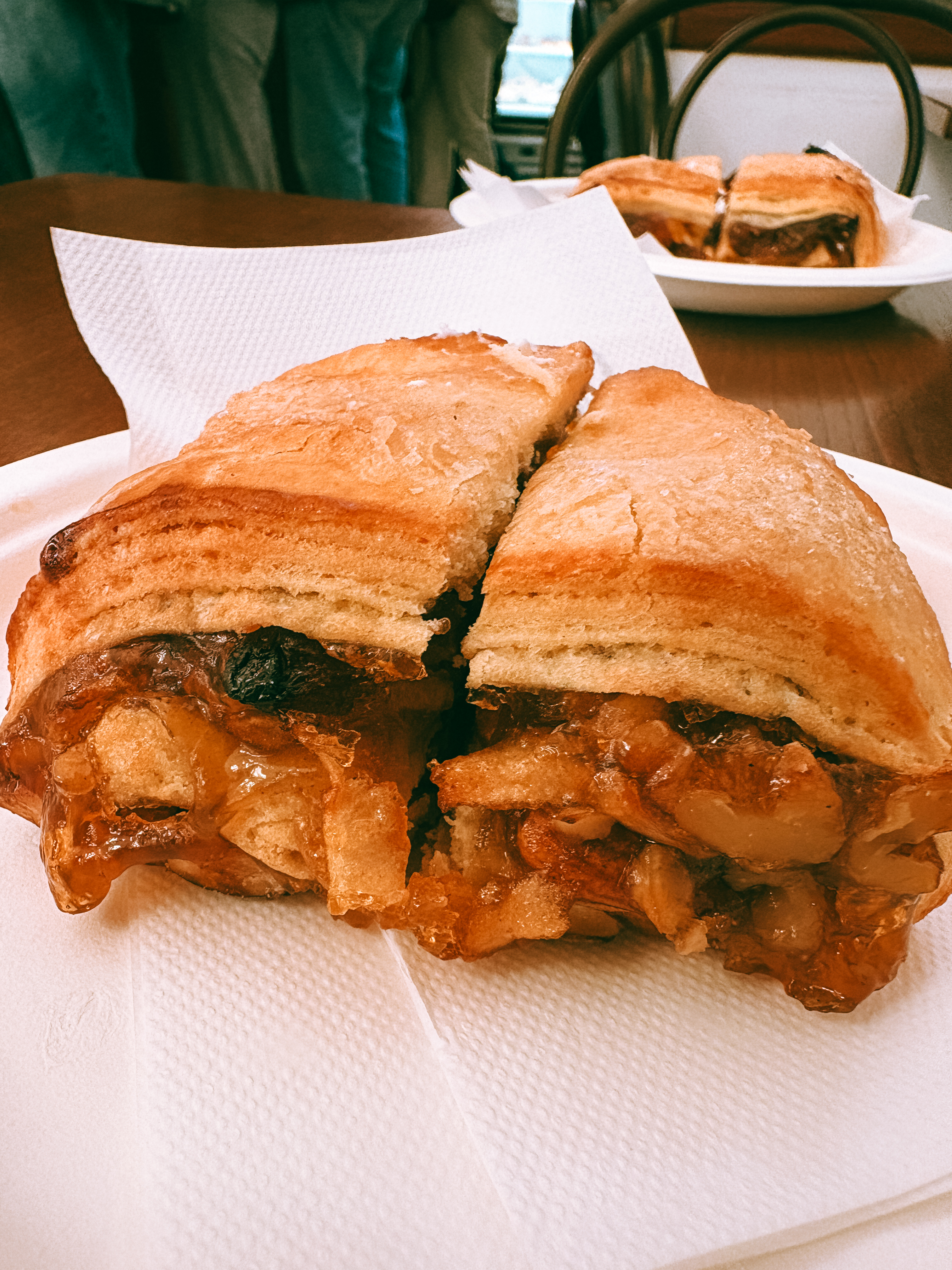
Rocciata is a traditional Umbrian sweet, particularly associated with Assisi and its surroundings.
It is a sort of roll of thin pastry filled with apples, dried fruit, raisins, sugar and spices. The recipe may vary slightly from family to family.
In some ways it resembles a strudel, but it has its own identity and a tradition that is entirely Umbrian.
Where to try it: I tasted it at Bar Senso. I liked the sweet, although I didn't find the service particularly friendly.
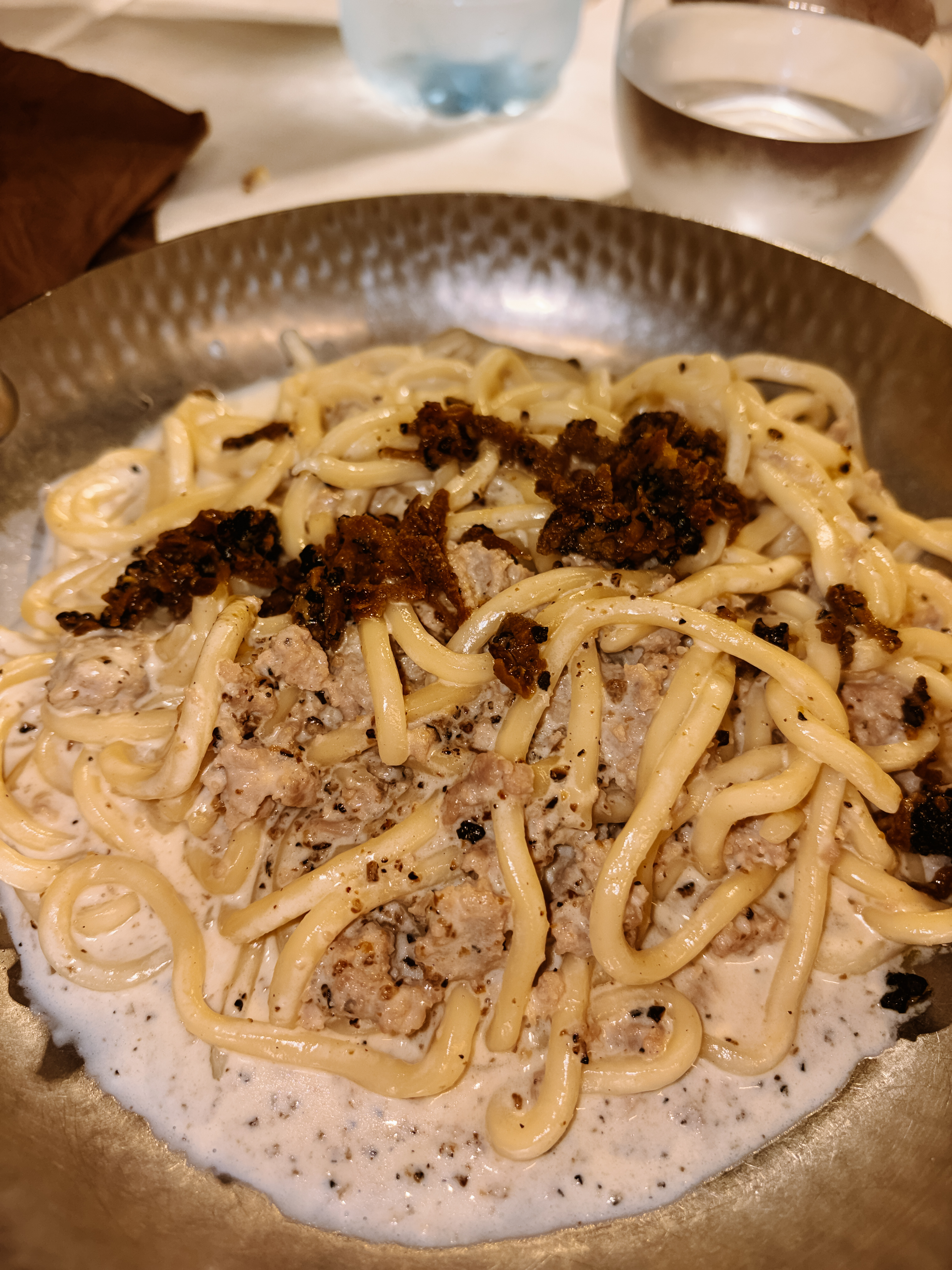
3. Strangozzi umbri
Strangozzi are a fresh pasta typical of Umbria, similar to a thick spaghetti with an irregular shape.
They are traditionally made with flour and water, without eggs, and dressed with various sauces, often based on truffle, mushrooms, tomato or ragù.
They are a dish you absolutely must try if you want to sample the local cuisine.
4. Umbricelli with ragù
Umbricelli are another Umbrian fresh pasta shape, similar to a thick spaghetti with a rustic texture.
They pair very well with flavourful sauces, including meat ragù.
Where to eat in Assisi
 Trattoria Pallotta €
A historic trattoria in the centre of Assisi, in a very characteristic position close to Piazza del Comune.
It's a place worth considering if you want to try traditional Umbrian dishes, such as strangozzi, homemade tagliatelle, torta al testo and other regional specialities. Book in advance, especially during busy periods.
Trattoria Da Erminio €
Another address to note for anyone looking for traditional cooking in a casual setting.
It is located in Via Montecavallo, in the historic centre, and is among the places you can consider for a lunch or dinner featuring Umbrian cuisine.
Trattoria degli Umbri €
It is located directly in Piazza del Comune, in a very convenient position for a break during your visit.
It's quite a small place, so bear in mind that at busier times you may need to wait or book ahead.
La Buca di San Francesco €€
It was my favourite restaurant during my stay in Assisi!
The place is very nice, the setting is well kept and I ate well. The price is slightly higher than at other trattorias, but in my opinion it was worth it.
I'd recommend it to anyone looking for a pleasant dinner who wants to treat themselves a little.
Pizzeria near Bar Trovellesi €
Where to stay in Assisi
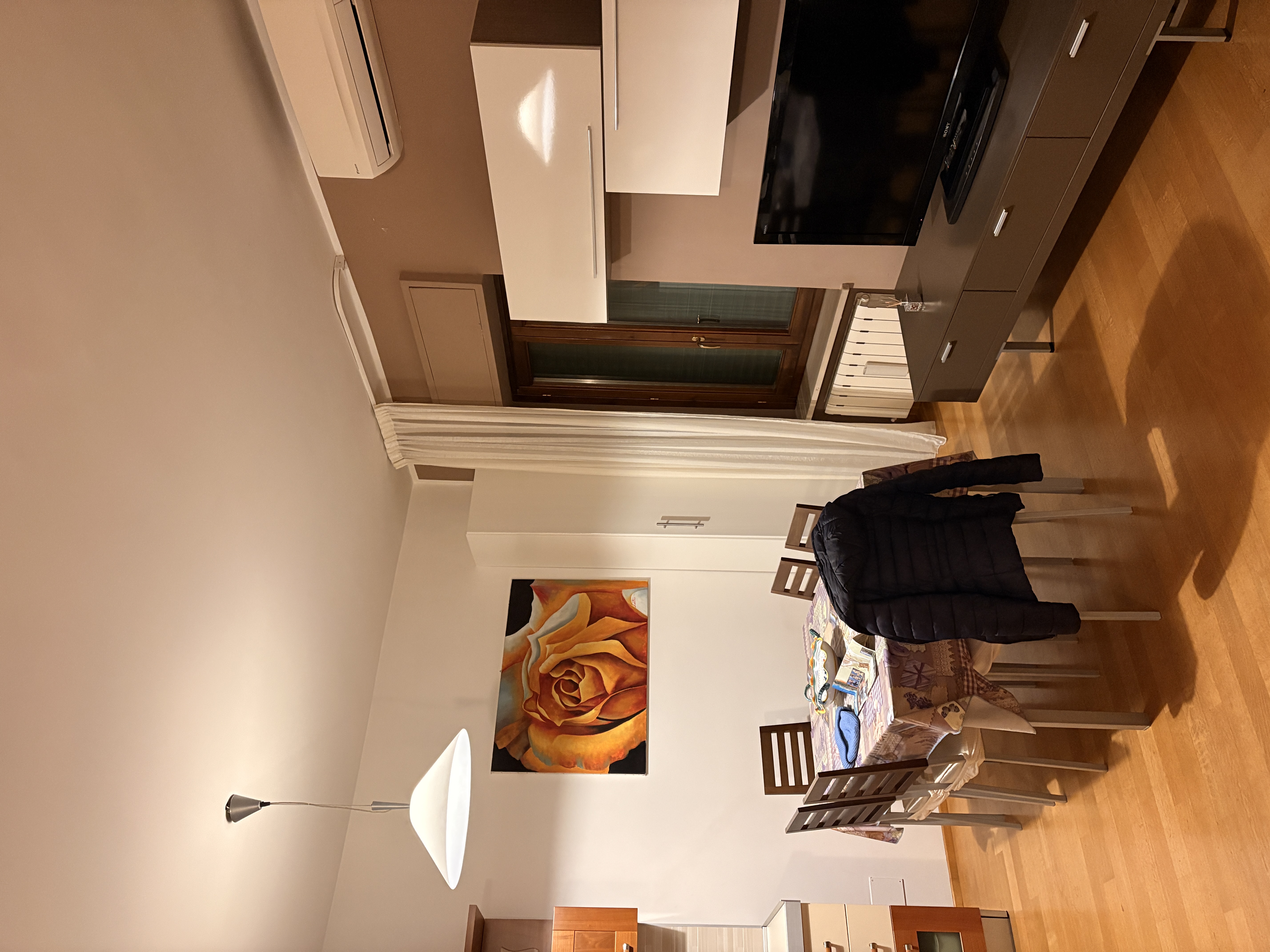
Casa Elena
Area: ten minutes' walk from the historic centre
Price: about €40 per night
Booking: Booking.com
During my stay I was staying at Casa Elena, an apartment I'd happily recommend.
It is about a 10-minute walk from the historic centre and offers a convenient way to visit the town without necessarily using a car for every journey.
The apartment was very nice, clean and well kept. Another plus is the parking included, a detail not to be underestimated when visiting Assisi by car.
I'd choose it especially if you're travelling by car and would rather have an apartment at your disposal than a hotel room.
Travelling with Stirati: Assisi for free and on a budget
Visiting Assisi doesn't necessarily mean spending a lot. Many of the town's most important places are free to access, and you can plan a visit full of history without buying tickets for every attraction.
Here are some tips for keeping within budget.
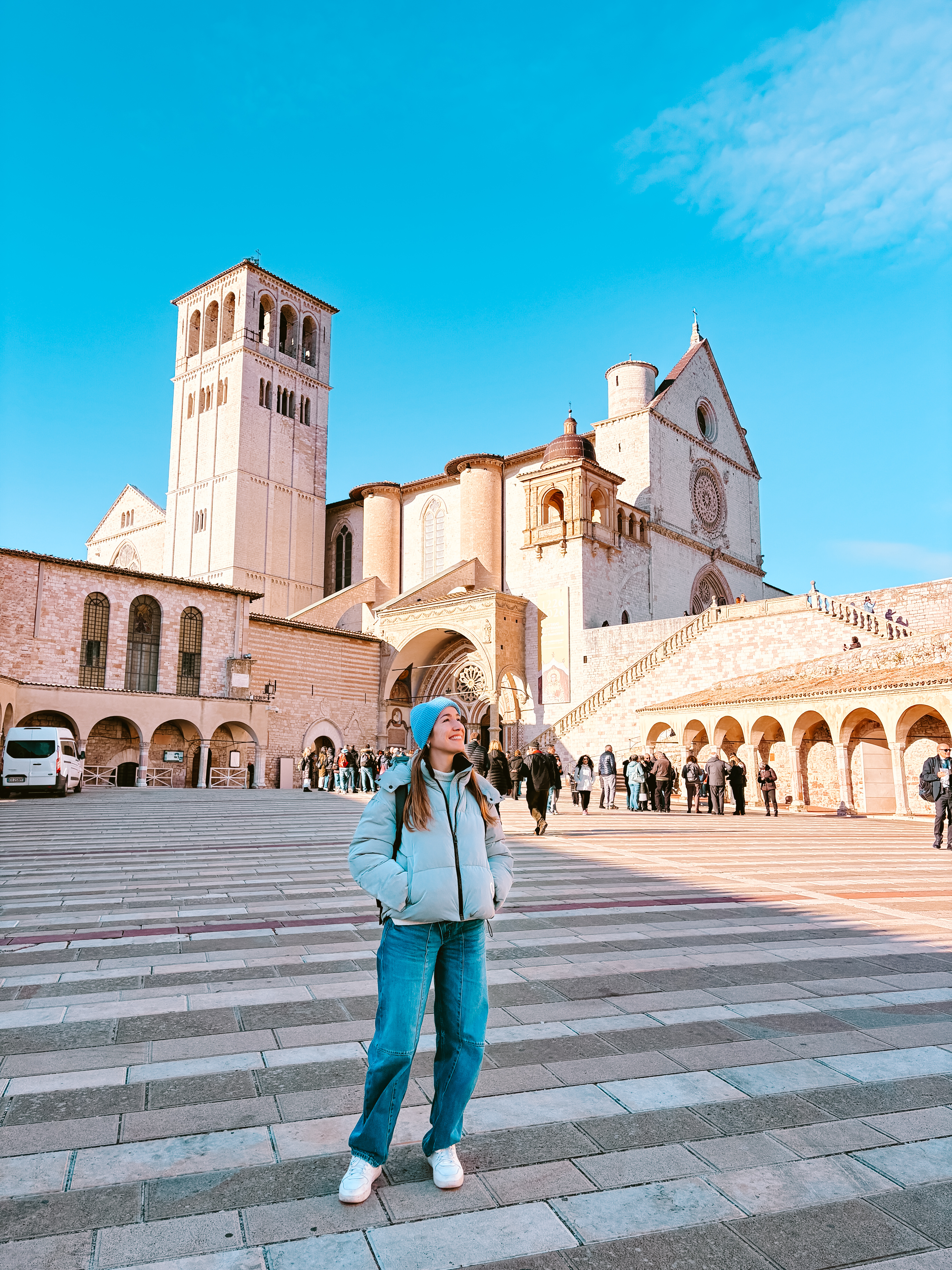
What to do for free in Assisi
Visiting the Basilica of Saint Francis
Entry to the Basilica is free, and you can admire one of Italy's most important artistic and spiritual complexes without buying a ticket.
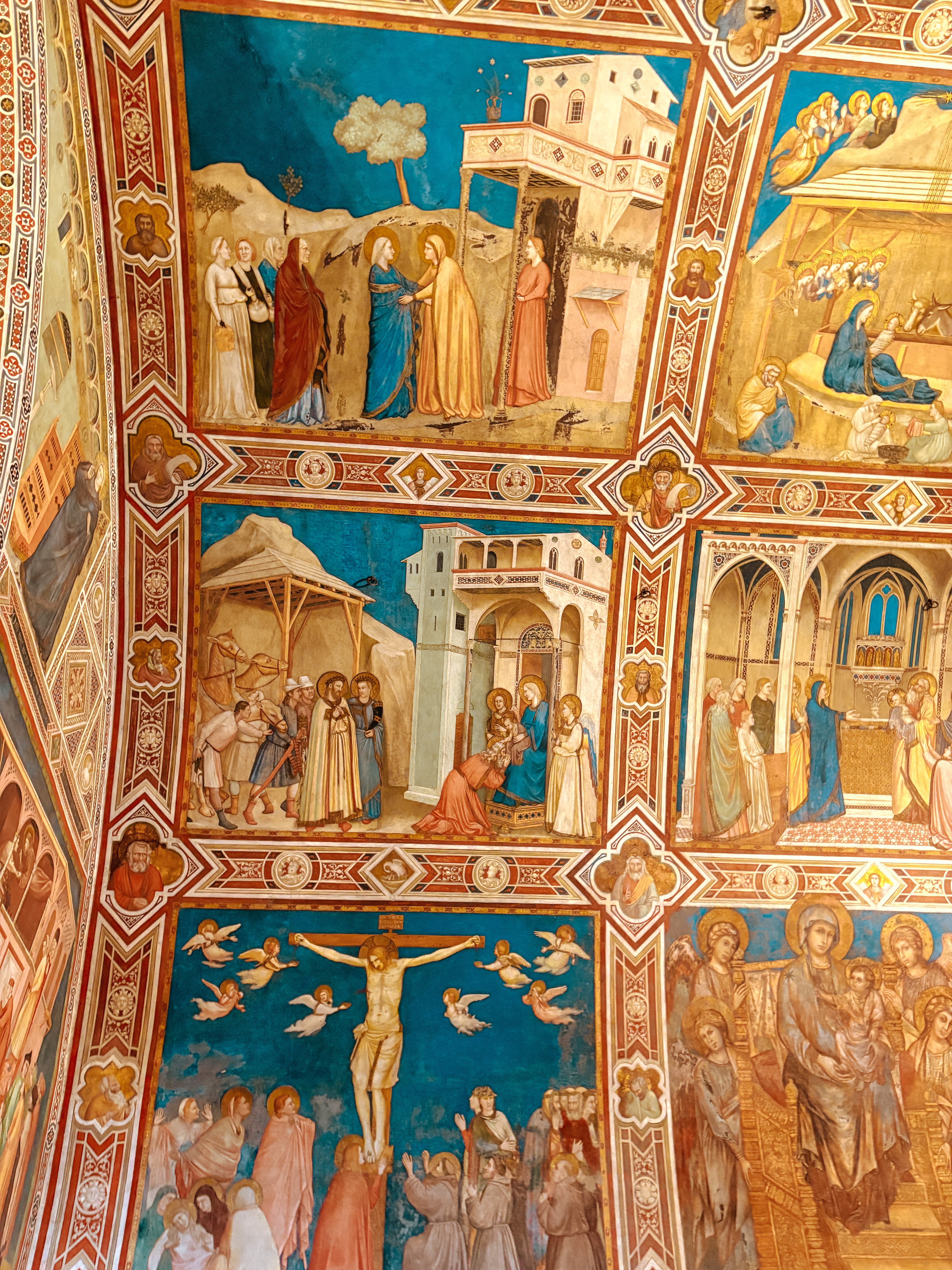
Entering the Basilica of Santa Chiara
Entry to the Basilica of Santa Chiara is also free. It is a key stop for learning about the saint's story and admiring the Crucifix of San Damiano.
Discovering Santa Maria Maggiore
The Sanctuary of the Renunciation is free to visit and houses one of the most important moments in Francis's life.
Visiting San Damiano
The sanctuary is free to enter and allows you to discover one of the most significant places of Francis's conversion.
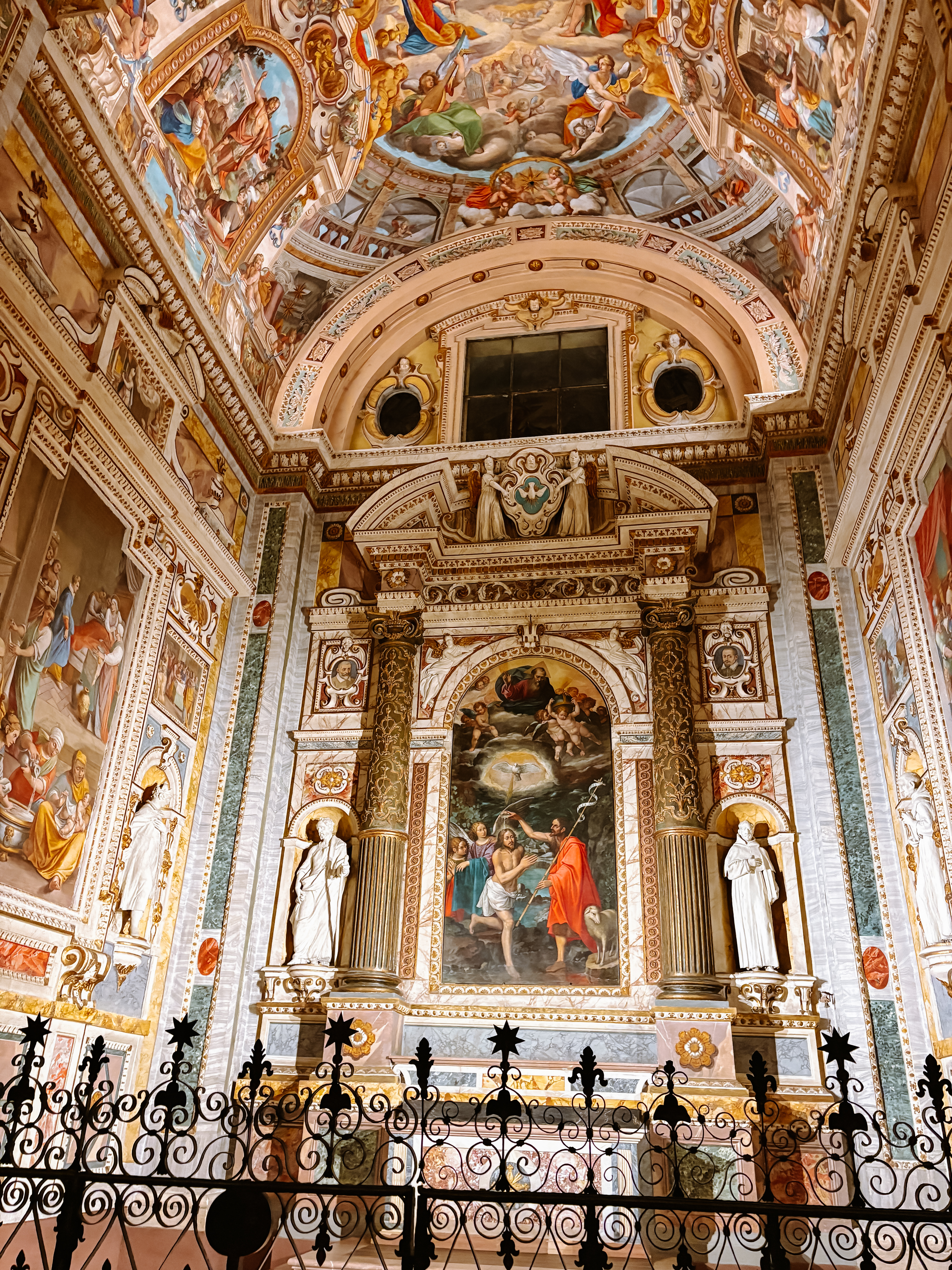
Seeing the Basilica of Santa Maria degli Angeli and the Porziuncola
The great basilica that houses the Porziuncola, a small medieval church linked to the life of Saint Francis, is free to enter. It is one of the most important sites of Franciscan spirituality.
Visiting San Rufino without the crypt
This is the cathedral of Assisi, dedicated to the town's patron saint. It is worth a visit for its splendid Romanesque façade and its interior, where you will also find the baptismal font in which, according to tradition, Saint Francis and Saint Clare were baptised.
Getting to the Eremo delle Carceri
Entry to the sanctuary is also free. You can combine the visit with a walk in the surrounding woods.
Strolling through the historic centre
Piazza del Comune, the medieval alleyways, the stone streets and the many panoramic views are all there to discover without buying a ticket.
Admiring Assisi from outside the Rocca Maggiore
Even without entering the fortress, you can reach the area and enjoy the view over the town and the valley.
My impression of Assisi
Assisi is a really beautiful town, rich in history and with an incredible artistic and cultural heritage. I especially enjoyed retracing the places of Saint Francis's life and discovering how many different traces lie hidden between the historic centre and the surroundings.
To be honest, I found it very touristy and, at times, distinctly crowded. One thing that struck me was the number of cars in the centre and on the surrounding streets, which sometimes takes away a little of the magic from the atmosphere of the hill town.
Some bars and places also didn't leave a particularly positive impression on me, especially regarding the quality of the service and the welcome. The large number of visitors probably makes the experience less pleasant in certain spots.
Nevertheless, Assisi is absolutely worth a visit. My advice is to dedicate at least two days to it, don't limit yourself to the Basilica of Saint Francis, and take the time to reach the less central places too. That is where you can discover another side of the town.

Travel creator from Bologna. I don't iron, but I am ironed: I tell stories of fantastic trips, write free itineraries and always look for the low-cost solution 💸
Keep travelling
Bologna in 2 days: what to see, what to eat and where to stay
Cervia and Milano Marittima: a seaside weekend in Romagna
Rio de Janeiro in a week: what to see and do
Bologna in 2 days: what to see, what to eat and where to stay
Cervia and Milano Marittima: a seaside weekend in Romagna
Rio de Janeiro in a week: what to see and do
Comments from the Stirati
No comments yet. Start the conversation.